
Plants
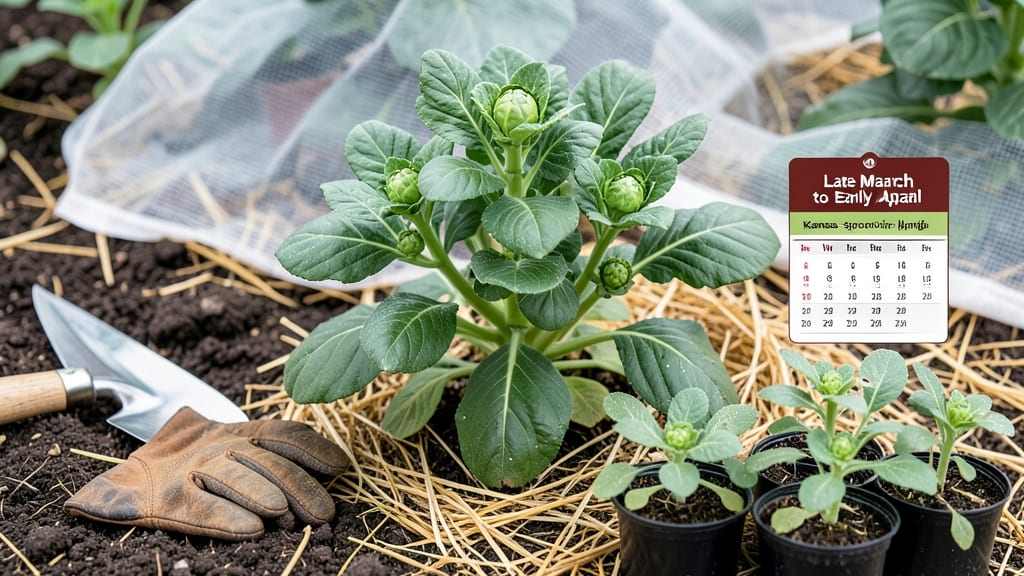
To plant brussel sprouts in Kansas, aim for mid-April to early June or late July to early August — timing that lets you beat the heat and the frost.
Picture this: you’ve spent weeks nurturing your 🥦 seedlings, only to watch them bolt in summer’s heat or freeze before producing a single sprout. In Kansas’ 6a zone, getting the timing right is the difference between a bumper crop and a bitter disappointment.
Brussel sprouts need 90 days of cool weather to mature, so planting too late in spring or too early in fall risks stunted growth or flavorless harvests.
The key is balancing frost dates with your garden’s microclimate — whether you’re in Wichita’s urban heat or the cooler hills of the Flint Hills.
Below, I’ll break down the exact windows for both spring and fall planting, how to prep your soil for Kansas’ clay-heavy dirt, and the one trick that saves sprouts from flea beetles — the #1 pest in this region.
Best planting months for Brussel sprouts in Kansas: frost timing explained
Kansas’ USDA zones 5-7 create a unique challenge for growing Brussel sprouts—too early, and heat stress ruins your crop; too late, and frost arrives before harvest. The key is timing transplants to align with average frost dates while avoiding summer’s scorching temperatures.
In most of Kansas, this means two distinct planting windows: spring (April-May) and fall (July-August).
Brussel sprouts are cool-season crops that thrive when daytime highs stay below 75°F (24°C). Kansas’ summer heat (often exceeding 90°F/32°C) can cause bolting—where plants flower prematurely and produce bitter sprouts.
That’s why fall planting is often more reliable, giving plants time to mature before the first frost in mid-October.
Here’s how Kansas’ microclimates affect your timing: Western Kansas (Zone 5) has earlier frosts, so shift planting 2-3 weeks earlier than eastern regions (Zone 7).
For example, in Wichita (Zone 7a), aim for late July transplants, while in Garden City (Zone 5b), start by mid-July to avoid heat stress.
Missouri Botanical Garden data shows Kansas’ average last frost ranges from April 15 (west) to May 1 (east), while the first frost hits October 15-30. To maximize harvests, plant 4-6 weeks before your expected first frost—this gives sprouts 90-120 days to mature before winter sets in.
The comparison table below breaks down the ideal planting windows by Kansas region, including soil temperature requirements and heat tolerance limits to help you avoid common mistakes.
For spring planting, transplant seedlings when soil temperatures reach 45°F (7°C)—typically mid-April to early May in Kansas. Choose cold-hardy varieties like ‘Long Island Improved’ or ‘Hudson’ to withstand early-season fluctuations.
If you miss spring, don’t despair: fall planting is often more productive, as cooler temps prevent bolting and improve flavor.
Adjust your schedule if you live in a microclimate, such as a low-lying area or near large bodies of water. These spots may experience 2-3 weeks earlier frosts than surrounding regions.
Use a local frost calendar (like Kansas State University’s) or a frost-sensitive plant test (e.g., basil) to confirm your area’s frost dates before planting.
Pro tip: Direct-sow seeds in early spring (March) for an earlier harvest, but be prepared to protect seedlings with frost cloth if late frosts occur. Alternatively, start seeds indoors 6-8 weeks before transplanting to give them a head start. Just remember: Brussel sprouts hate heat
Step-by-step planting schedule: from seedlings to harvest in Kansas
Timing is everything when growing Brussel sprouts in Kansas. These cool-season plants need 90-120 days to mature, so planting too early or late means missing the sweet spot between first frost risks and summer heat stress.
My USDA Zone 6a garden thrives with two planting windows: spring (April-May) and fall (July-August) for a double harvest.
Before you even think about seedlings, Kansas soil needs prep. Test your soil pH—Brussel sprouts crave 6.0-7.0. Amend with compost or aged manure to boost organic matter, and till in a 2-3 inch layer of compost.
I swear by a raised bed for better drainage, especially in clay-heavy Kansas soils.
🌱 Your Kansas Brussel Sprout Planting Timeline
-
1
Start Seeds Indoors (4-6 weeks before transplant)
Use seed-starting trays with sterile seed mix. Keep under grow lights (12-16 hours/day) at 60-65°F soil temp. Harden off seedlings 7-10 days before transplanting.
-
2
Transplant Seedlings (Spring: April 15-May 15; Fall: July 15-August 1)
Wait until soil temps reach 45°F+ and night temps stay above 50°F. Space plants 18-24 inches apart in rows 30 inches apart. Bury seedlings deeper than usual—up to first true leaves—to prevent bolting.
-
3
Mulch & Fertilize (Within 2 weeks of transplanting)
Apply 3-4 inches of straw mulch to retain moisture and suppress weeds. Side-dress with compost tea or balanced 10-10-10 fertilizer every 4-6 weeks. Avoid high-nitrogen fertilizers—they promote leafy growth over sprouts.
-
4
Water Deeply (Weekly, 1-2 inches)
Water at soil level, not overhead, to prevent disease. Use a drip irrigation system for consistency. Let the top 1 inch of soil dry between waterings to prevent rot. Cut back watering 2 weeks before harvest to concentrate flavor.
-
5
Harvest Before Frost (October-December)
Pick sprouts from the bottom up when they reach 1-1.5 inches in diameter. Use a sharp knife to cut stems cleanly. Leave 4-6 inches of stem between harvests. For fall-planted sprouts, harvest before hard frost (below 25°F) to avoid bitterness.
Kansas’ variable weather can throw off even the best-laid plans. If summer heat arrives early, use shade cloth (30-50%) to protect seedlings. I’ve also had success with row covers in late summer to extend the growing season for fall plantings.
Monitor your plants closely—yellowing leaves often signal nutrient deficiency or pest damage.
Pro tip: Save seeds from your best Brussel sprout varieties for next year! Let the topmost sprouts mature fully on the plant, then dry and store them.
My Ruby Cross plants always produce the sweetest sprouts, and I’ve successfully overwintered seeds in Kansas’ climate. Just remember: patience pays off with these slow growers!
With this schedule, you’ll enjoy homegrown Brussel sprouts from October through December, just in time for holiday feasts. And if you time it right, you might even get a second harvest from spring plantings the following summer. Happy gardening! 🥦