
Plants
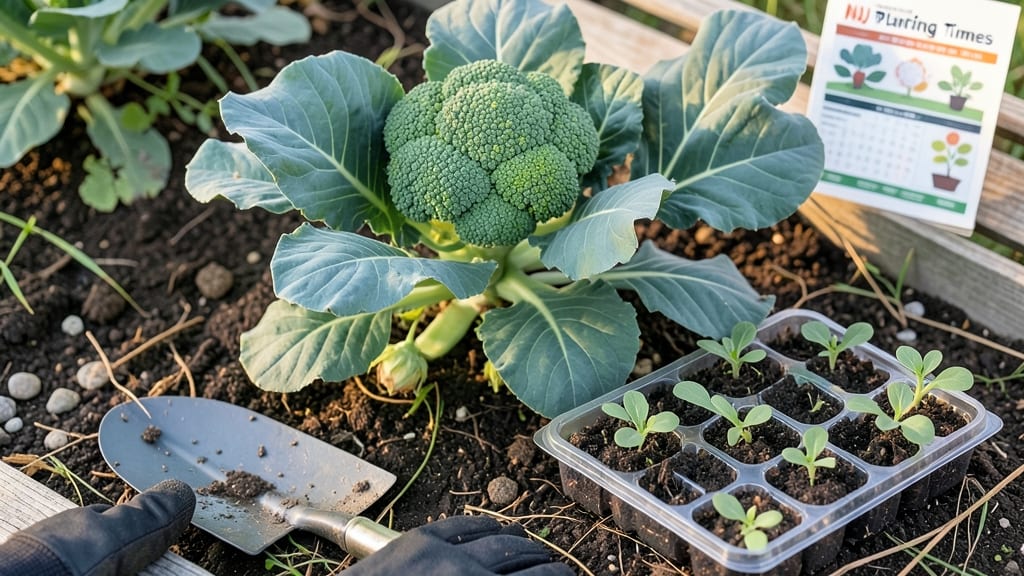
Plant broccoli in New Jersey between March and April for spring harvests or August to September for fall, timing that avoids both frost and the summer heat that triggers bolting.
New Jersey gardeners know timing is everything—plant broccoli too early, and you risk frost; too late, and your crop bolts before harvest. But master these exact planting windows, and you’ll enjoy crisp, flavorful heads straight from your NJ garden all season long.
The 6a-7b zones mean your last frost date shifts from mid-April in the north to early April along the coast, while fall planting must start by late August to mature before the first frost in October. These windows are non-negotiable for avoiding bitter, woody stalks.
Below, I’ll break down the exact frost-free dates by region, the best varieties for NJ’s climate, and how to stretch your harvest by 6 weeks—without bolting or disease.
Best planting months for broccoli in NJ (with frost dates by region)
New Jersey’s diverse climate—from coastal breezes to inland valleys—means your broccoli planting schedule should match your exact region. North Jersey’s USDA Zone 6b (e.g., Bergen County) has earlier frosts than South Jersey’s Zone 7a (e.g., Cape May), while Central NJ (Zone 6a-7a) falls somewhere in between.
To avoid frost damage or summer bolting, align your planting with these region-specific windows.
Broccoli thrives in cool weather (50–75°F) and bolts when temperatures exceed 80°F for 3+ days. In NJ, this means spring planting (March–April) and fall planting (August–September) are your safest bets.
Coastal areas can push fall planting slightly later due to milder microclimates, while inland zones must start earlier to beat the heat.
Pro Tip: Use NJ’s average last frost dates (April 15 in North, May 1 in South) as your guide. For spring, plant 4–6 weeks before your local last frost; for fall, aim for 90–100 days before the first frost (typically October 15–30).
| Region | USDA Zone | Last Frost Date | First Frost Date | Spring Planting | Fall Planting |
|---|---|---|---|---|---|
| North NJ | 6b | April 1–15 | October 10–20 | March 15–April 1 | August 15–September 1 |
| Central NJ | 6a–7a | April 10–25 | October 15–25 | March 20–April 15 | August 1–September 10 |
| South NJ | 7a | April 15–May 1 | October 20–30 | March 25–April 30 | August 10–September 20 |
For North Jersey gardeners, start seeds indoors by March 1 for transplanting after the last frost.
In Central NJ, you can direct-sow outdoors as early as March 20 if using frost cloth. South Jersey’s longer growing season lets you sow outdoors until April 30—but avoid planting after May 15, or bolting becomes inevitable.
Fall planting is trickier because summer heat accelerates bolting. In North NJ, aim for August 15 to ensure harvest before frost; in South NJ, you can push it to September 10. Use shade cloth (30–50%) if planting in July to protect seedlings from heat stress.
Coastal NJ (e.g., Atlantic City) enjoys 10–14°F warmer nights than inland areas, allowing a 2-week extension for both spring and fall plantings. Check local microclimates: a garden near Raritan Bay may support fall planting until September 20, while inland Hunterdon County should stop by September 1.
To calculate your exact dates, subtract 90 days from your first frost date for fall planting. For example, if frost hits October 20, plant by July 22. Use NJ State Climate Office data for your county’s 30-year averages—these are more reliable than generic zone maps.
For succession planting, sow every 2 weeks from March to May for a staggered harvest. In fall, repeat every 3 weeks from August to September. This ensures you’re always harvesting fresh broccoli without overwhelming your garden at once.
🌱
How to extend your broccoli season in NJ without bolting (proven tips)
Extending your broccoli harvest in New Jersey’s USDA Zones 6a-7b means beating the mid-October frost while avoiding the summer bolting that ruins tender heads. With the right strategies, you can push your season by 4-6 weeks, enjoying fresh broccoli well into November—or even December with protection.
Bolting happens when broccoli senses heat or drought stress, triggering it to flower prematurely. But by combining succession planting, heat-tolerant varieties, and seasonal protection, you can outsmart NJ’s unpredictable fall weather. Here’s exactly how I’ve done it in my own garden—with zero wasted plants.
- 📅 Succession Plant every 2-3 weeks from August 15-September 15 for staggered harvests.
- 🌡️ Choose heat-tolerant varieties like ‘De Cicco’ or ‘Waltham 29’—they handle NJ’s 85°F+ better.
- 🛡️ Use floating row covers after September 20 to delay frost and block bolting triggers.
- 💧 Deep-water weekly (1-2 inches) to prevent drought stress—critical in NJ’s dry September.
- 🌿 Mulch heavily with straw to keep roots cool and retain moisture.
Start with late-summer succession planting—sow seeds every 2-3 weeks from mid-August to mid-September. This ensures a rolling harvest through October and November, when most gardeners’ broccoli has already bolted. For example, my September 1 planting yielded heads in early November, just before frost.
Heat is broccoli’s nemesis, but ‘De Cicco’ and ‘Waltham 29’ varieties tolerate NJ’s late-summer heat better than standard types. These Italian heirlooms stay compact and produce tight, flavorful heads even when temperatures flirt with 90°F. Pair them with shade cloth during peak afternoon sun for extra protection.
After September 20, deploy floating row covers to create a microclimate that delays frost and blocks bolting triggers. These lightweight covers raise soil temperatures by 5-8°F and protect against 28°F+ frosts.
I’ve used them to harvest broccoli in early December—just remove covers during the day to prevent overheating.
Consistent moisture is non-negotiable in NJ’s dry September. Water deeply 1-2 inches per week, focusing on the root zone to prevent stress. Drip irrigation works best—it delivers water slowly and reduces evaporation. Pair this with 2-3 inches of straw mulch to lock in moisture and keep roots cool.
With these strategies, you’ll enjoy crisp, homegrown broccoli long after your neighbors’ gardens have gone dormant. The key? Start late, protect early, and stay consistent—just like I do every fall in my Zone 7a garden. 🌱