
Plants
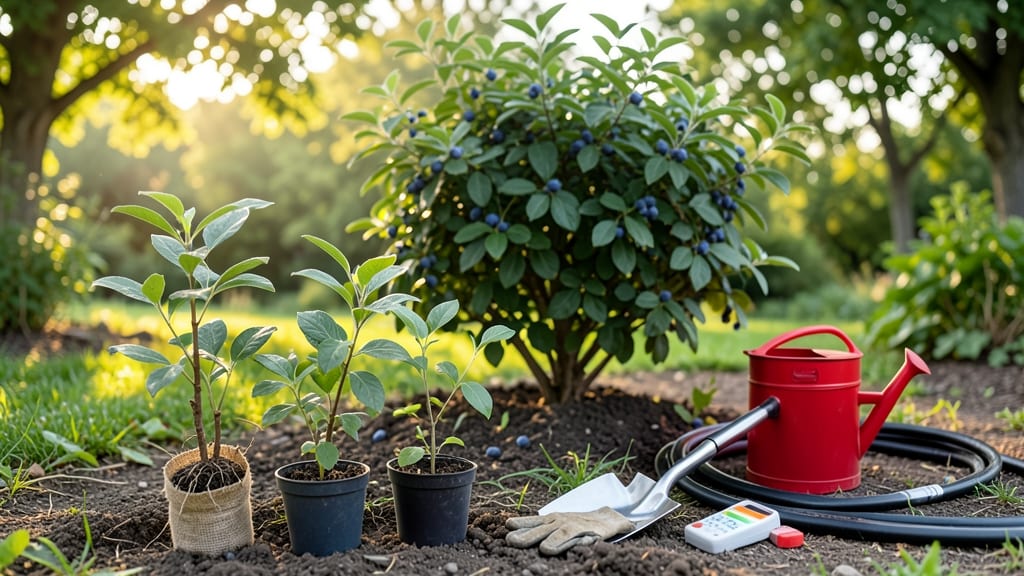
Planting blueberries in Mississippi requires knowing the exact chill-hour needs and frost-free window to avoid stunted growth or dead plants.
Mississippi’s humid climate and long growing season make blueberry bushes thrive—but timing your planting wrong can mean poor yields or even plant death.
Most gardeners in Zones 7b-9a should plant bare-root blueberries between November and February, when soil temperatures are cool and frost isn’t a threat.
Below, I break down the chill-hour requirements for southern highbush vs. rabbiteye varieties, regional frost-free dates, and how to prep soil for acid-loving 🫐 bushes that produce year after year.
Mississippi blueberry planting timeline: frost-free dates by region
Mississippi’s three distinct climate zones create different planting windows for blueberries. Whether you’re in North Mississippi (Zone 7b), Central Mississippi (Zone 8a), or South Mississippi (Zone 8b), knowing your last frost date and chill-hour needs is critical.
Southern highbush varieties thrive with 300-500 chill hours, while rabbiteye varieties need 200-400 chill hours, making timing everything for success.
For North Mississippi (Zone 7b), the last frost date typically falls around March 15, giving you a 6-week window to plant bare-root blueberries before summer heat arrives.
In Central Mississippi (Zone 8a), the frost-free date shifts to February 28, while South Mississippi (Zone 8b) gardeners can start planting as early as February 15. These dates align with Mississippi State Extension recommendations for optimal transplanting success.
Bare-root plants should be planted in late fall or early spring, while container-grown blueberries offer more flexibility and can be transplanted year-round in mild winters. In Zone 7b, aim for November to February planting, while Zones 8a and 8b can extend planting into March. Always check soil temperatures—45°F or warmer is ideal for root establishment.
Southern highbush varieties like ‘Peach Sorbet’ or ‘Jewel’ are perfect for Zones 8a and 8b, while rabbiteye varieties such as ‘Climax’ or ‘Powderblue’ handle Zone 7b’s cooler winters better. Choose varieties based on your chill-hour requirements and local microclimates, as urban areas may experience 2-4°F warmer temperatures than rural zones.
| Region | USDA Zone | Last Frost Date | Best Planting Window | Recommended Varieties |
|---|---|---|---|---|
| North Mississippi | 7b | March 15 | November–February | Climax, Powderblue, Tifblue |
| Central Mississippi | 8a | February 28 | November–March | Peach Sorbet, Jewel, Southern Highbush |
| South Mississippi | 8b | February 15 | February–March | O’Neal, Premier, Star |
If you’re planting container-grown blueberries, you can extend your window into late spring, but avoid transplanting after April 15 in Zone 7b or May 1 in Zones 8a/8b, as summer heat stress can stunt root growth.
For bare-root plants, soak roots for 2-4 hours before planting to prevent transplant shock.
Mississippi’s humid summers mean blueberries need well-draining, acidic soil (pH 4.5-5.5) to thrive. Amend clay soils with peat moss or pine bark and mulch heavily with pine straw to retain moisture and regulate soil temperature.
In Zone 7b, apply a 4-inch mulch layer to protect roots from winter freeze-thaw cycles.
For container gardening, use large pots (15+ gallons) with acidic potting mix and ensure drainage holes are present. Containers warm up faster in Zone 8b, so monitor soil moisture closely during spring and fall.
In Zone 7b, containers may need winter protection like burlap wraps or frost blankets during hard freezes.
After planting, water deeply once a week for the first 4 weeks to encourage root establishment. Avoid overhead watering to prevent fungal diseases like botrytis, which thrive in Mississippi’s humidity.
Drip irrigation or soaker hoses work best for even moisture distribution. In Zone 8b, reduce watering slightly in summer to avoid root rot from waterlogged soil.
Finally, mark your planting dates on a calendar and track chill hours using a chill-hour calculator from Mississippi State Extension. If your area falls short on natural chill hours, consider dormant spraying with hydrogen cyanamide or plant low-chill varieties like ‘O’Neal’ or ‘Premier’ for Zone 8b.
With the right timing and variety selection, your Mississippi blueberry bushes will produce sweet, juicy berries for years to come—just don’t wait until after the last frost date! 🫐
Chill-hour requirements for blueberries in Mississippi’s heat
Mississippi’s mild winters mean chill-hour requirements are critical for blueberries to produce fruit. Southern highbush varieties need 300-500 chill hours, while rabbiteye types thrive with 200-400 hours. Without enough cold exposure, your bushes may bloom but fail to set fruit—wasting your effort and space.
Most of Mississippi falls into USDA Zones 7b-9a, where natural chill hours often fall short. For example, Jackson (Zone 8a) typically gets only 250-350 chill hours annually, making rabbiteye varieties like ‘Tifblue’ ideal.
Meanwhile, northern Mississippi (Zone 7b) may accumulate 400-500 hours, better suited for southern highbush types like ‘Climax’.
| Variety | Chill Hours Needed | Best Mississippi Zone | Notes |
|---|---|---|---|
| Southern Highbush | 300-500 | 7b-8a | Dwarf varieties like ‘Top Hat’ for containers |
| RabbitEye | 200-400 | 8a-9a | Heat-tolerant, great for southern MS |
| Half-High | 400-600 | 7b only | Best for northern MS, needs supplemental chilling |
If your region falls short of required chill hours, you can supplement naturally by planting in shaded areas or near reflective surfaces (like white walls) to extend cold exposure.
For extreme cases, artificial chilling—like storing potted plants in a refrigerator for 2-4 weeks at 35-40°F—can trick bushes into dormancy before spring planting.
Mississippi State Extension recommends planting bare-root bushes in late fall or winter (November-February) to maximize chill accumulation. This timing also avoids summer heat stress while roots establish. Always mulch heavily with pine straw to insulate roots and retain moisture during Mississippi’s hot summers.
For container growers, dwarf varieties like ‘Peach Sorbet’ (southern highbush) or ‘Aliceblue’ (rabbiteye) are excellent choices. These adapt better to urban heat islands and can be moved to cooler microclimates during summer. Just ensure containers have drainage holes and use acidic potting mix (pH 4.5-5.5).
Test your soil’s chill-hour capacity by tracking winter lows with a minimum-maximum thermometer. If your area consistently stays above 45°F for long stretches, consider chill-hour banking—planting in a north-facing slope or using windbreaks to extend cold periods.