
Plants
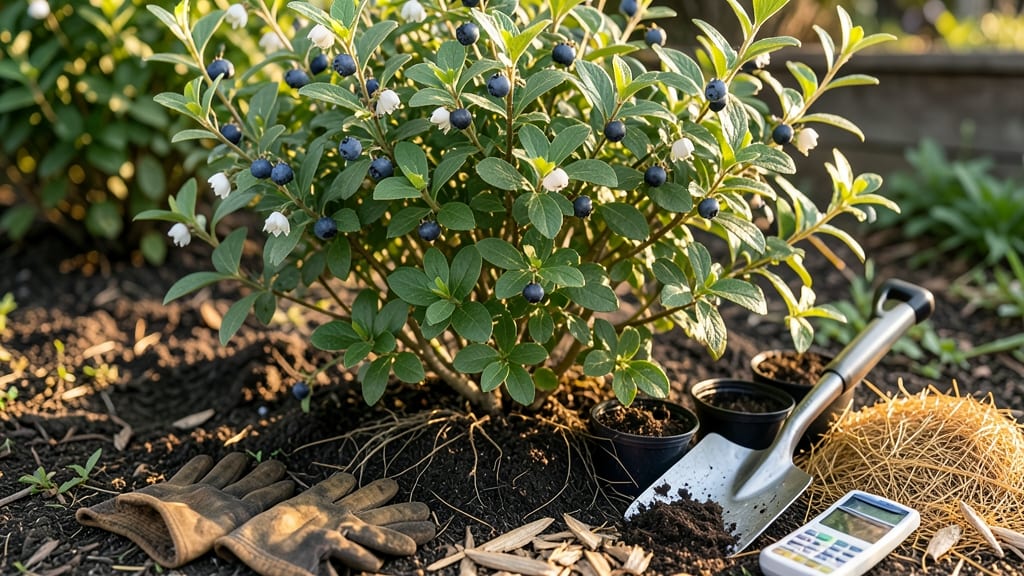
Plant blueberry bushes in Mississippi between October and February to give them the best shot at thriving in your 7b-9a climate.
Mississippi’s warm climate and unique chill-hour requirements make blueberry planting a balancing act—but timing it right can mean the difference between a thriving bush and a failed harvest.
Southern highbush varieties need 300-500 chill hours, while rabbiteye types thrive with 400-1,000 hours. Planting in late fall or early spring lets roots establish before the heat arrives, and your soil’s acidity (pH 4.5-5.5) plays a bigger role than you might think.
Below, I’ll break down the exact months to plant by variety, how to prep your soil for Mississippi’s heat, and the one mistake that kills bushes before they even fruit.
Mississippi’s best planting months for blueberry bushes by chill-hour needs
Mississippi’s warm winters and hot summers create a unique challenge for growing blueberries—chill hours become the deciding factor in selecting varieties and planting times.
Unlike northern states, Mississippi’s USDA Zones 7b-9a require careful timing to ensure your bushes get enough cold exposure for bud break. Southern highbush varieties need as few as 400-500 chill hours, while rabbiteye types thrive with 600-1,000 hours.
Planting too early or late can leave your bushes struggling to fruit.
Most gardeners in Mississippi plant blueberries in late fall or early spring, but the best window depends on your specific variety and microclimate. Fall planting (October-November) gives roots time to establish before summer heat arrives, while early spring (February-March) avoids winter stress.
The key is balancing soil temperatures (ideal: 40-60°F) with chill accumulation to prevent premature budding.
Here’s how Mississippi’s three main blueberry types align with planting seasons and chill-hour needs:
For southern highbush varieties like 'Misty' or 'Peach Sorbet', fall planting (October-November) is ideal because they require minimal chill hours (400-500). The cooler temperatures help roots establish before Mississippi’s intense summer heat arrives.
These varieties are perfect for southern Mississippi (Zones 8-9), where winters are mild. If you plant in early spring (March), ensure the soil stays moist—drought stress can stunt young bushes.
In contrast, rabbiteye varieties like 'Climax' or 'Powderblue' demand 800-1,000 chill hours, making them better suited for northern Mississippi (Zones 7b-8). These bushes thrive when planted in late January or February, allowing them to experience the full winter chill before budding.
Planting too early can trick the bush into premature budding, which frost can damage. Use row covers if an unexpected late frost threatens.
If you’re in central Mississippi (Zone 8a), consider half-high varieties like 'Tifblue' or 'Premier', which need 600-800 chill hours. These can be planted in February or early March, striking a balance between chill accumulation and avoiding summer heat.
For all varieties, amend soil with peat moss to maintain acidity (pH 4.5-5.5)—Mississippi’s native soil is often too alkaline for blueberries.
Pro tip: Use a chill-hour calculator or consult your local Mississippi State Extension office to confirm your specific chill-hour zone.
In southern Mississippi (Zone 9a), even rabbiteye varieties may struggle without artificial chill extension, like planting in a north-facing location or using shade cloth during summer to reduce heat stress.
After planting, mulch with pine straw or wood chips to retain moisture and acidify the soil gradually. Water deeply once a week for the first month, then taper to every 2-3 days during dry spells. Avoid overhead watering to prevent fungal diseases like botrytis, which thrives in Mississippi’s humid summers.
Timing your blueberry planting correctly in Mississippi isn’t just about the calendar—it’s about matching your variety’s chill needs to your local microclimate. With the right approach, you’ll enjoy juicy, homegrown berries for years to come. 🫐🌱
How to adjust planting timing for Mississippi’s microclimates and soil conditions
Mississippi’s Delta region and North Mississippi have wildly different conditions for blueberry bushes. In the Delta (Zone 8a-9a), heat and humidity dominate, while North Mississippi (Zone 7b) gets cooler winters and more frost risk. These differences mean your planting window and soil prep must adapt—or your bushes will struggle.
For example, rabbiteye varieties like 'Tifblue' need 800+ chill hours to fruit well, but they’ll overheat if planted too early in the Delta. Meanwhile, southern highbush types like 'Climax' thrive with just 300-500 chill hours, making them ideal for North Mississippi’s cooler pockets.
Your soil’s pH (4.5-5.5) is just as critical. Mississippi’s native clay soils often test alkaline (7.0+), which locks out iron and phosphorus—nutrients blueberries crave. Without adjusting pH, your bushes will yellow leaves and poor fruit set, no matter how perfect your timing.
⚠️ callout-warning
If you plant rabbiteye blueberries in North Mississippi (Zone 7b) before November 1st, they’ll sprout early and frost damage roots before winter. In the Delta (Zone 8a-9a), planting after February 15th risks heat stress before roots establish.
Solution: Use mulch (4-6 inches) to regulate soil temps. For 800+ chill-hour varieties, try fall planting in North MS or early spring (Feb) in the Delta with drip irrigation.
To extend chill hours for high-chill varieties, try these tricks: 1. Plant in a north-facing slope to delay spring warmth. 2. Use white shade cloth (30-50%) in late winter to reflect heat. 3. Choose half-high varieties like 'Peach Sorbet' (500-600 chill hours) as a middle ground.
Drainage is another Mississippi-specific hurdle. Clay-heavy soils in the Delta hold too much water, causing root rot. Amend with sand or pine bark (20% mix) before planting. In North Mississippi, sandy loams drain too fast—add peat moss to retain moisture during summer droughts.
Test your soil’s pH and drainage 4-6 weeks before planting. If pH is above 5.5, mix in sulfur or pine needles (1 lb per 100 sq ft).
For drainage, dig a 12-inch-deep hole, fill with water, and time how long it takes to drain—more than 4 hours means you need amendments.
Finally, water deeply after planting to settle soil around roots. In the Delta, drip irrigation is a game-changer—it delivers 1-2 gallons per plant daily during peak heat (June-August), preventing fruit drop and leaf scorch.