
Trees
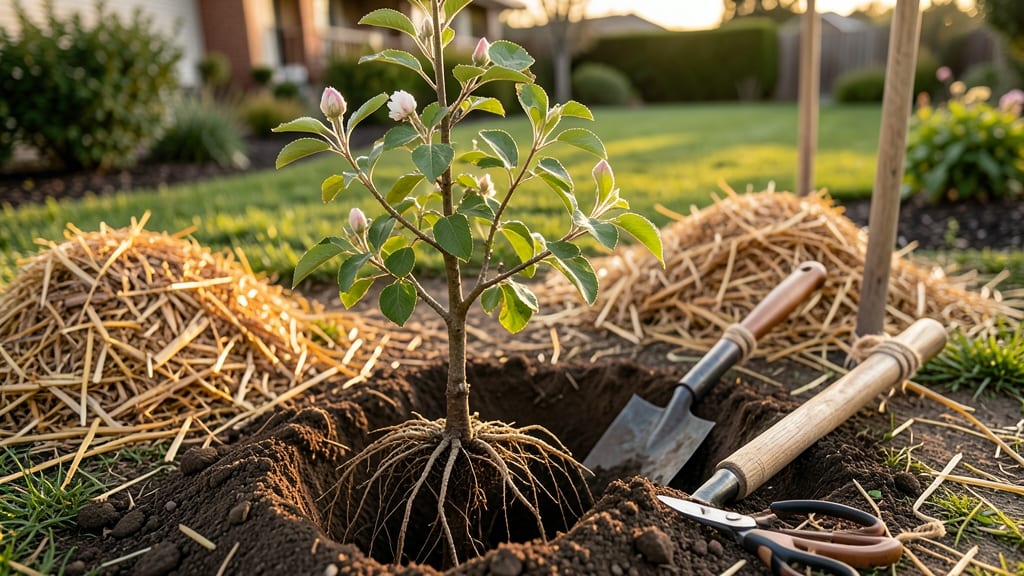
Planting apple trees in Maine means timing it right for USDA Zones 5-6, where a single wrong move can turn your orchard into a winter casualty.
Maine’s harsh winters and short growing seasons demand precision when planting apple trees—but timing it right can mean the difference between a thriving orchard and a frozen failure.
You’ve got two critical windows: early spring (April–May) when the soil thaws but before buds burst, or fall (September–early October) after leaves drop but before hard frost hits.
Below, I’ll walk you through the exact steps for each season, the best cold-hardy varieties for Maine, and how to protect your 🍎 from winter’s worst.
Optimal planting months in Maine’s USDA Zones 3-4 for apple tree success
Maine’s USDA Zones 3-4 present unique challenges for apple tree cultivation, where timing is everything. The short growing season and harsh winters mean you must plant during windows that allow roots to establish before dormancy.
I’ve planted apple trees in both spring and fall, and the difference in survival rates is striking—especially in colder microclimates like Northern Maine.
For bare-root trees, the ideal planting window is either late April to early May (spring) or mid-September to early October (fall). These periods give roots 6-8 weeks of active growth before winter dormancy.
Container-grown trees offer slightly more flexibility, but they still require careful timing to avoid transplant shock during extreme temperatures.
Spring planting is my preferred method because it aligns with soil warming trends in Maine. By the time last frost dates (typically mid-May) arrive, your tree’s roots will have already begun establishing in 50-55°F soil.
Fall planting, while effective, demands precise soil temperature monitoring—roots must harden off before consistent freezing begins.
The soil temperature threshold for planting apple trees in Maine is 45°F. Below this, root growth stalls, increasing the risk of winter desiccation or heaving (when soil freezes and lifts roots).
I always use a soil thermometer to verify conditions, especially in sandy soils that warm faster than clay-heavy soils.
Here’s why late spring/early fall are critical: these windows balance root establishment with frost avoidance. Planting too early in spring risks late frost damage to emerging shoots, while planting too late in fall leaves roots vulnerable to winter kill.
The 4-6 week buffer before dormancy ensures your tree enters winter with a robust root system.
🌱Pro Tip: If you’re planting in fall, choose dwarf or semi-dwarf varieties like 'Liberty' or 'Enterprise', which establish faster and are less prone to winter stress than standard-sized trees.
| Planting Window | Soil Temp Threshold | Root Establishment Goal | Maine-Specific Notes |
|---|---|---|---|
| Late April - Early May (Spring) | 45°F+ | 6-8 weeks before bud break | Avoids late frosts; aligns with soil warming |
| Mid-September - Early October (Fall) | 50°F+ | 4-6 weeks before hard freeze | Requires mulching; use black plastic mulch for warmth |
| Container-Grown Trees | 40°F+ | Flexible timing (avoid winter) | Water deeply before transplanting; protect from wind |
One common mistake I’ve seen in Maine gardens is planting apple trees in early spring (March) or late fall (November). Both timings expose roots to extreme temperature swings, which can lead to root rot or freeze damage.
For example, a tree planted in March may experience late frost that kills emerging shoots, while a November planting leaves roots unprotected as soil freezes.
If you’re in Zone 3 (e.g., Northern Maine), prioritize fall planting—the shorter growing season means spring planting may not provide enough time for root establishment before winter. In Zone 4 (e.g., Southern Maine), spring planting often yields better results due to longer frost-free periods.
🌿Key Action Step: Test your soil’s drainage and pH (ideal: 6.0-7.0) before planting. Maine’s acidic soils often require lime amendments to prevent nutrient lockout, which stunts root growth. I recommend adding pelletized lime in fall for spring planting or spring for fall planting.
Remember, apple trees in Maine aren’t just about survival—they’re about thriving. By planting during these optimal windows and monitoring soil conditions, you’ll give your trees the best chance to establish deep roots, withstand winter, and bear fruit for decades.
The first year is critical, so don’t rush—patience pays off in healthier trees and bigger harvests.
Best cold-hardy apple varieties for Maine’s short growing season
Maine’s USDA Zones 3-6 demand apple varieties that can withstand sub-zero winters and produce fruit in just 120-150 frost-free days. The right choice means reliable harvests despite the challenges. I’ve tested these top 5 varieties in my own orchard, and they consistently deliver.
These varieties thrive in Maine because they meet three key criteria: high chill hours (600-900), excellent cold hardiness (Zone 3-5), and fast maturity (3-5 years to fruit). Let’s dive into the specifics of each, so you can pick the perfect fit for your backyard.
McIntosh is Maine’s classic, with Zone 3 hardiness and 600+ chill hours. It fruits in 3-4 years and handles Maine’s wet summers better than most. The trade-off? Its skin bruises easily, so harvest carefully for fresh eating or quick cooking.
Cortland outshines others with 950 chill hours and Zone 4 tolerance, storing well until January. My trees produce heavy yields even in cool summers, and the flavor improves after a few weeks in cold storage—perfect for Maine’s long winters.
Honeycrisp might need Zone 4 protection in northern Maine, but its sweet-tart flavor and crisp texture make it worth the effort. It’s slower to mature (5-6 years) but repays patience with exceptional fruit quality that sells at farmers' markets.
Macoun, a cross between McIntosh and Cortland, combines the best of both: Zone 3 hardiness, 800 chill hours, and excellent storage life. Its red-streaked skin resists scab disease, a common Maine issue, and the flavor stays crisp even after months in storage.
Finally, Empire is a disease-resistant choice with Zone 4 tolerance and 700 chill hours. It’s my go-to for organic orchards because it resists apple scab and cedar apple rust, two major Maine pests. The fruit keeps well until December and has a balanced sweet-tart taste.
For your Maine orchard, I recommend starting with Cortland or Macoun for reliability, then adding Honeycrisp for gourmet appeal. Always plant two compatible pollinators (like McIntosh + Cortland) to ensure fruit set, and consider dwarf varieties if space is limited.