
How To
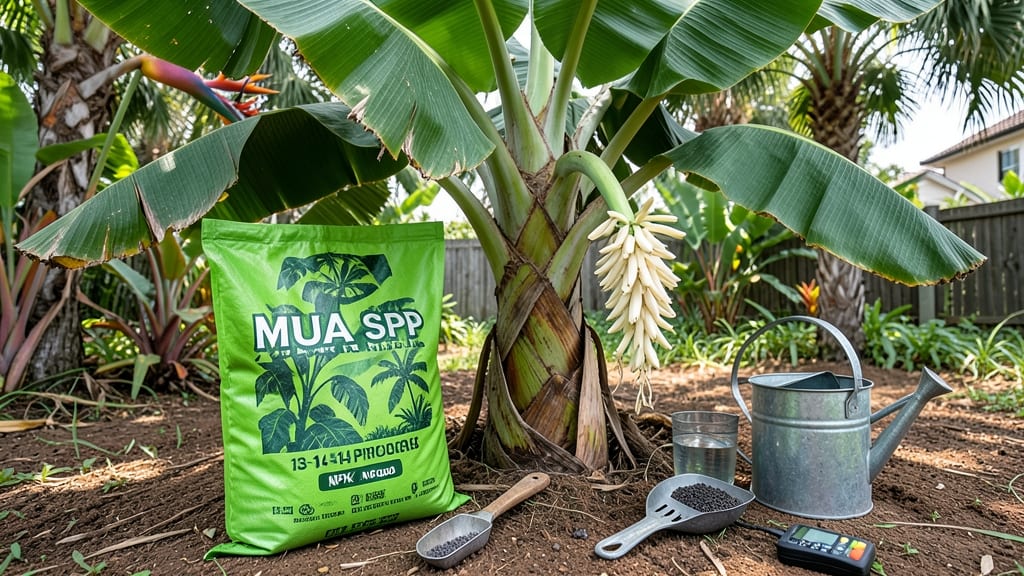
Fertilizing your banana tree at the right time is the key to fast growth and bigger fruit—but timing it wrong can leave you with yellowing leaves or no harvest at all.
Picture this: You’ve spent months nurturing your 🍌 banana tree, only to watch it struggle when the wrong fertilizer hits the soil. The difference between a thriving plant and a stressed one often comes down to when—not just what—you feed it.
In tropical and subtropical zones (10-12), your banana tree craves nutrients year-round, but the timing shifts with the seasons. Spring and summer are prime feeding windows, while fall and winter demand a lighter touch—or even a pause if frost is on the horizon.
Below, I’ll break down the exact schedule for your climate, the signs your tree is hungry (or overfed), and how to adjust for faster results without burning the roots.
Best fertilizing schedule for banana trees by season (with key nutrient needs)
Banana trees are heavy feeders, and their nutrient needs shift dramatically between growth stages. In tropical climates, they grow year-round, while subtropical and temperate zones require seasonal adjustments.
The key is matching your fertilizer schedule to the tree's current phase—whether it's leafy vegetative growth, flowering, or fruit development. Over-fertilizing can burn roots, while underfeeding stunts fruit production. Let's break down the best approach for each climate and season.
For tropical climates (USDA Zones 10-12), banana trees grow continuously, so you'll fertilize every 4-6 weeks year-round. In subtropical zones (Zone 9b), you'll pause feeding in winter when growth slows. Temperate zones (below Zone 9) require container growing and a shorter feeding window.
The NPK ratio (Nitrogen-Phosphorus-Potassium) changes too—high nitrogen for leaves, balanced NPK for flowering, and potassium-rich for fruiting. Let’s dive into the monthly breakdown.
🌱 PRO TIP: Always water your banana tree deeply before fertilizing to prevent root burn. Early morning is the best time to apply fertilizer, as it gives nutrients time to absorb before the heat of the day.
| Season | Growth Stage | Fertilizer Frequency | NPK Ratio | Key Nutrient Focus | Notes |
|---|---|---|---|---|---|
| Spring (Mar-May) | Vegetative Growth | Every 4 weeks | 10-10-10 or 8-3-9 | High Nitrogen | Boost leafy growth |
| Summer (Jun-Aug) | Flowering | Every 6 weeks | 6-6-6 or 5-10-10 | Balanced NPK | Support flower buds |
| Late Summer (Sep-Oct) | Fruiting | Every 4-6 weeks | 3-4-6 or 2-5-3 | High Potassium | Enhance fruit quality |
| Fall-Winter (Nov-Feb) | Dormancy (Subtropical/Temperate) | None (or light in tropical) | N/A | None | Pause feeding; protect from frost |
| Winter (Dec-Feb) | Tropical Growth | Every 8 weeks (light) | 6-6-6 | Maintenance | Reduce frequency in dry seasons |
In spring, focus on leaf growth with a nitrogen-rich fertilizer like 10-10-10. This is when your banana tree recovers from winter dormancy (if applicable) and builds a strong canopy.
Apply fertilizer every 4 weeks until you see new leaves emerging. For container-grown trees, use half the recommended dose to avoid salt buildup in the soil.
As summer arrives and flower stalks appear, switch to a balanced NPK ratio like 6-6-6. Phosphorus helps root development and flower formation, while potassium strengthens the plant’s overall health. Reduce feeding frequency to every 6 weeks during extreme heat to prevent stress.
If your tree is in Zone 9b or cooler, stop fertilizing entirely by late summer to prepare for winter.
When banana bunches form, prioritize potassium-rich fertilizers like 3-4-6 or 2-5-3. Potassium improves fruit quality, size, and disease resistance. Continue feeding every 4-6 weeks until harvest. Avoid high-nitrogen fertilizers now—they can delay fruiting. In tropical climates, this phase can extend year-round, so monitor your tree’s response closely.
If you're in a subtropical or temperate zone, your banana tree may go dormant in winter. During this time, skip fertilization entirely. Instead, focus on
Signs your banana tree needs fertilizer (and when to adjust your schedule)
Your banana tree communicates hunger through subtle but unmistakable signs. Yellowing leaves along the edges or stunted growth are classic red flags—these mean your plant isn’t getting enough nitrogen or potassium. Even worse, brown leaf tips or crispy edges signal over-fertilization, which can burn roots and halt fruiting.
Pay attention to these visual cues, as they directly impact your tree’s ability to produce large, healthy bananas.
Another key indicator is fruit development. If your bananas stay small, underdeveloped, or fail to ripen properly, your tree’s nutrient reserves are depleted. Even worse, premature fruit drop often stems from a lack of phosphorus or potassium during the flowering stage.
Adjust your fertilizing schedule based on these growth patterns to ensure your tree thrives year-round.
🌱
✅ Fertilize When...
- 🌿 New leaves appear smaller than usual
- 🍌 Bananas grow slowly or stay tiny
- 💧 Soil feels dry between waterings (spring/summer)
- 🌡️ Temperatures stay above 60°F (active growth)
❌ Avoid Fertilizing When...
- 🍂 Leaves turn brown/crispy (over-fertilized)
- 🌡️ Temps drop below 50°F (dormancy)
- 🌧️ Heavy rain is forecasted (runoff wastes fertilizer)
- 🍃 Fruit is already dropping (stress signal)
Adjust your fertilizing schedule based on leaf color and growth speed. If your banana tree’s leaves turn yellow-green or develop purple stems, it’s craving phosphorus—time to switch to a high-P fertilizer (like 10-20-10) during the flowering stage.
For slow growth, boost nitrogen (use 20-10-10) in early spring to jumpstart new leaves.
Soil texture also reveals clues. Compacted or waterlogged soil restricts root access to nutrients, while sandy soil drains too quickly. Test your soil’s pH—banana trees thrive in slightly acidic soil (pH 6.0-7.0).
If your soil is too alkaline, roots can’t absorb nutrients efficiently, even with fertilizer. Amend with peat moss or sulfur to adjust pH before feeding.
Timing matters just as much as type. Fertilize in early morning to avoid leaf burn from midday sun. In tropical climates, feed every 4-6 weeks year-round, while subtropical zones should pause in winter. Always water deeply 24 hours before and after fertilizing to prevent root damage.
Watch for over-fertilization signs like leaf scorch or white crust on soil—these mean your tree is struggling to process excess nutrients. Flush the soil with water and reduce feeding frequency. Balance is key: a well-fed banana tree produces 30% larger fruit and 2x more bunches than an underfed one.
☀️