
Plants
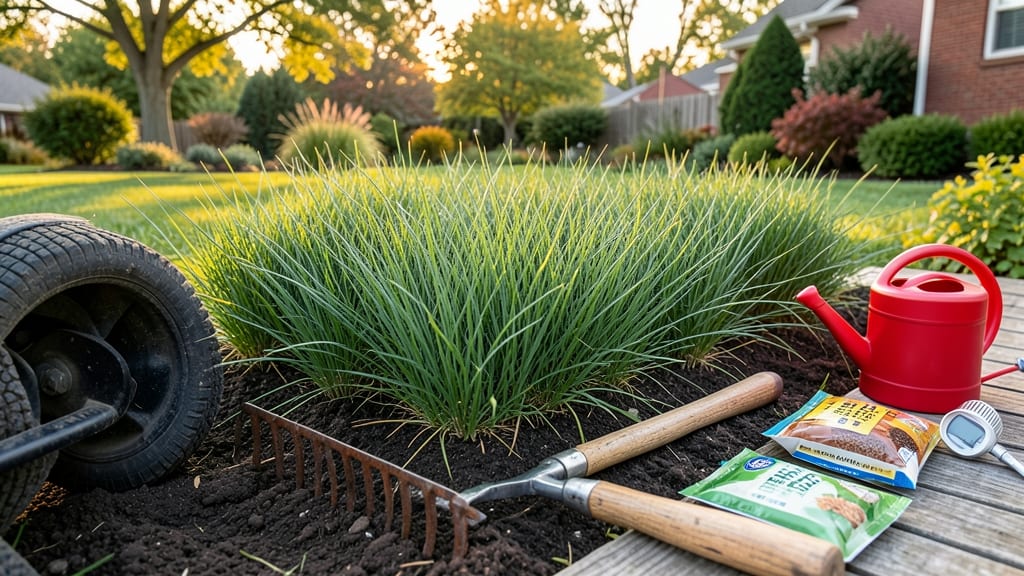
The best time to plant grass seed in the fall is 4-6 weeks before your first frost—typically late September to mid-October in USDA Zone 6a—when soil stays warm enough for germination but cools just enough to slow weeds.
Picture this: you’ve spent hours preparing your soil, spreading seed, and watering carefully, only to wake up to a frost-killed lawn. That’s why timing matters—cool-season grasses like Kentucky Bluegrass and Tall Fescue need those 60–75°F soil temps to take root before winter dormancy kicks in.
Fall planting gives your grass seed a head start, letting roots establish deep before winter’s chill sets in. It also means less competition from summer weeds, so your lawn gets a stronger foundation for next spring’s growth.
Below, I’ll break down the exact window for your region, how to prep your soil, and the critical mistakes that derail even the best-laid plans. Let’s get that lawn off to the right start.
Optimal fall planting windows for cool-season grass by region and climate
Cool-season grasses like Kentucky Bluegrass, Tall Fescue, and Fine Fescue rely on fall planting to establish deep roots before winter. But the perfect timing varies dramatically across the U.S.—planting too early exposes seedlings to summer heat, while waiting too late risks frost damage.
Understanding your USDA hardiness zone and local microclimates is key to maximizing germination success.
In northern climates (Zones 3-5), the ideal window is mid-August to early October, giving grass 4-6 weeks to root before first frost. Southern regions (Zones 6-8) can extend planting until late October or early November, thanks to milder winters.
Even within these zones, elevation, urban heat islands, and coastal influences can shift the optimal window by 2-4 weeks.
Here’s how to pinpoint your exact planting window using USDA zones, regional adjustments, and microclimate factors:
| USDA Zone | Northern Climates (Early Frost) | Southern Climates (Late Frost) | Microclimate Adjustments |
|---|---|---|---|
| 3-4 | Mid-August to September 15 | N/A (Too cold) | Add 1-2 weeks for high-elevation areas |
| 5-6 | Late August to October 1 | September 15 to October 20 | Delay 1 week in urban heat zones |
| 7-8 | N/A (Too warm) | September 1 to November 15 | Extend to November 30 in coastal areas |
| 9-10 | N/A (Too warm) | October 1 to December 1 | Avoid planting after first 32°F frost |
For early falls with unseasonably warm temperatures (e.g., 90°F+ in September), delay planting until soil temps drop below 85°F to prevent seed dehydration. Use a soil thermometer to monitor—ideal germination occurs at 60–75°F.
In late falls, prioritize planting 4 weeks before frost; if frost arrives early, opt for winter ryegrass, which tolerates colder soils.
Regional examples highlight these nuances: In Minnesota (Zone 4), aim for late August to mid-September, while Texas (Zone 8) gardeners can plant until mid-November. Even within states, mountainous areas (e.g., Colorado’s Front Range) may need 2-week earlier planting than valley regions.
Check your local Cooperative Extension Service for hyper-local frost date data.
Adjust for microclimates like south-facing slopes (warmer, plant later) or north-facing yards (cooler, plant earlier). Shady spots may require Fine Fescue, which germinates slower—extend your window by 10–14 days for these varieties. Always test soil moisture; dry conditions can stall germination even at perfect temperatures.
Pro tip: Use a frost calendar from your state’s agricultural department to refine your timing. For example, Alabama’s northern tier (Zone 7) might plant in early October, while southern Alabama (Zone 8) can go until mid-November.
When in doubt, err on the earlier side—grass planted in September often outperforms late-October plantings due to longer root development before winter.
Remember, cool-season grasses need 60–75°F soil temps and consistent moisture to germinate. If your fall is unusually dry, consider pre-watering the soil 24 hours before seeding to create an optimal environment. With the right timing, your lawn will reward you with thicker, greener growth next spring—no patchy surprises included.
How fall soil and weather conditions affect grass seed germination success
Fall is the perfect window for planting cool-season grass seed, but success hinges on understanding how soil temperature, moisture levels, and daylight hours interact. When soil temps hover between 60–75°F, seeds germinate quickly, while cooler conditions slow growth—sometimes dangerously so.
Even the best grass seed varieties struggle if planted too early or late, risking weak roots before winter dormancy.
Moisture is equally critical—consistent soil dampness (not soggy) is non-negotiable for the first 30 days. Fall’s shorter daylight hours also reduce evaporation, giving seeds a better shot at survival.
However, early frosts or dry spells can derail germination entirely. That’s why prepping your lawn with aeration and fertilization is half the battle.
| Factor | Ideal Condition | Actionable Tip |
|---|---|---|
| Soil Temperature | 60–75°F | Test with a soil thermometer; wait if temps drop below 50°F. |
| Moisture Level | Consistently damp | Water deeply 2x daily for first 2 weeks; use a rain gauge. |
| Daylight Hours | 10–12 hours | Avoid planting when days drop below 10 hours; growth slows dramatically. |
| Soil pH | 6.0–7.5 | Test soil and amend with lime (to raise) or sulfur (to lower) 2 weeks before planting. |
| Pre-Seeding Fertilizer | High phosphorus (e.g., 0-20-10) | Apply 2–3 weeks before planting to boost root development. |
Aeration is your first step to creating the perfect seedbed. Compacted soil blocks water and oxygen, stifling germination. Use a core aerator in early fall (late August to early September) to pull out 3–4 inch plugs, then top-dress with compost or peat moss to improve texture.
This also helps seed-to-soil contact, which is critical for even sprouting.
Don’t skip the soil test—especially if your lawn has history with weeds or poor growth. Cool-season grasses like Kentucky Bluegrass and Tall Fescue thrive in slightly acidic to neutral soil (pH 6.0–7.5). If your test shows pH outside this range, amend it 2 weeks before planting.
A quick fix? Spread pelletized lime for high pH or elemental sulfur for low pH, then till lightly to incorporate.
Finally, time your pre-seeding fertilization carefully. A high-phosphorus fertilizer (like 0-20-10) applied 2–3 weeks before planting encourages strong root systems. Avoid nitrogen-heavy blends—too much can burn tender seedlings. Pair this with a light starter fertilizer at planting time for an immediate growth boost.
With the right soil prep and attention to fall weather patterns, your grass seed will germinate in 7–21 days and establish roots deep enough to survive winter. Skip these steps, and you’ll be fighting patchy lawns come spring. 🌱