
Size
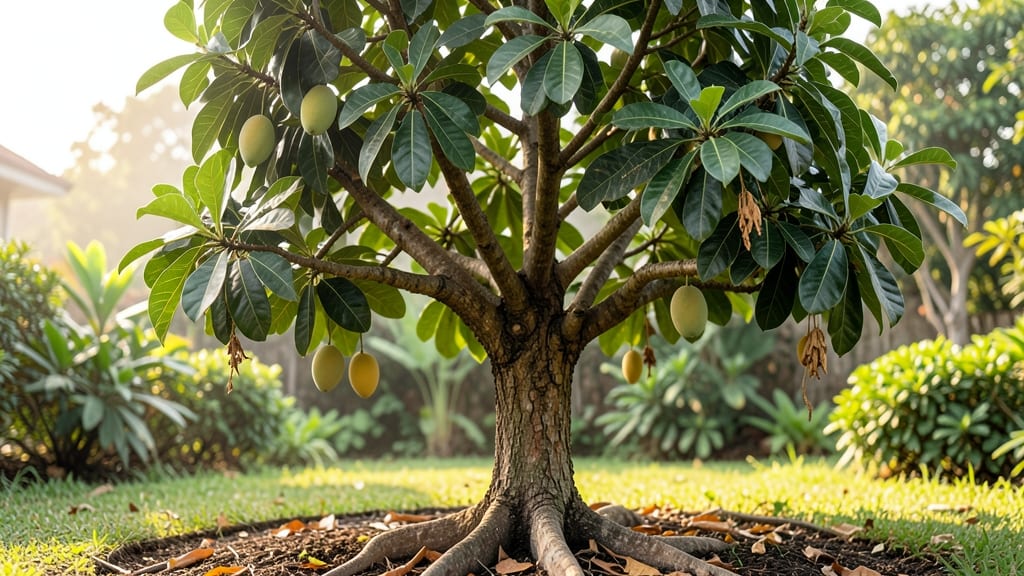
A mango tree can grow anywhere from 10 feet to a towering 100 feet tall, depending on the variety and growing conditions 🥭.
Dreaming of a lush mango tree in your backyard but worried it’ll outgrow your space? The height of a mango tree can vary dramatically—from compact dwarf varieties perfect for containers to towering giants reaching 100 feet in tropical climates.
If you’re working with limited space, dwarf varieties like ‘Cogshall’ or ‘Julie’ stay between 6 and 12 feet, making them ideal for urban gardens or even large pots. Meanwhile, standard varieties can shoot up to 40–100 feet in tropical regions like Florida or Hawaii, where they thrive year-round.
Below, I’ll break down the height ranges by variety, how climate and pruning affect growth, and the easiest ways to keep your mango tree manageable—whether you’re growing it in a container or a full backyard.

Mango tree height by variety: from dwarf to giant sizes
If you're wondering how tall can mango trees grow, the answer depends entirely on the variety you choose. Some mango trees stay small enough for containers, while others become towering giants that dominate tropical landscapes.
The mature height of a mango tree can range from just 6 feet to over 100 feet, making them incredibly versatile for different garden spaces.
For backyard gardeners in USDA zones 10-11, selecting the right variety is key. Dwarf mango trees are perfect for urban gardens, patios, or even large containers, while standard varieties thrive in rural tropical settings. Understanding these size differences helps you plan spacing, pruning, and even container sizes before planting.
🌱
| Variety Type | Mature Height | Growth Rate | Ideal Growing Conditions | Best For |
|---|---|---|---|---|
| Dwarf Varieties | 6–12 ft | Slow to moderate | Containers, small gardens, full sun | Urban patios, balconies, small yards |
| Semi-Dwarf Varieties | 15–25 ft | Moderate | Well-drained soil, full sun, warm climates | Backyard gardens, larger containers |
| Standard Varieties | 40–60 ft | Fast | Deep, fertile soil, tropical climates | Rural properties, orchards, large estates |
| Giant Tropical Varieties | 50–100+ ft | Very fast | Humid, frost-free zones, abundant water | Tropical landscapes, large estates |
Dwarf mango varieties like 'Cogshall' and 'Julie' are excellent choices for gardeners with limited space. These trees typically reach 6–12 feet at maturity, making them ideal for containers or small backyards. They require similar care to standard varieties but stay manageable with regular pruning.
In my own container garden, a dwarf mango tree has thrived for years, producing sweet fruit without overwhelming the space.
Semi-dwarf varieties strike a balance, growing 15–25 feet tall. These are perfect for larger backyards where you want a manageable tree with good fruit production. Varieties like 'Keitt' and 'Haden' fall into this category and are popular in subtropical climates.
They require more space than dwarfs but are still easier to manage than full-sized trees.
Standard mango trees, such as 'Alphonso' and 'Kent', can grow 40–60 feet tall in ideal conditions. These varieties are common in commercial orchards and rural settings where space isn’t a constraint.
If you're planting one in your yard, plan for pruning to control height and shape, as they can become quite large over time.
For those in truly tropical climates, giant mango varieties like 'Amrapali' or 'Banganapalli' can reach 50–100 feet or more. These trees are stunning but require significant space, deep soil, and consistent moisture.
They’re best suited for large properties or orchards where their full potential can be realized without crowding other plants.
When choosing a mango tree, consider not just its height potential but also its growth rate and climate requirements. Dwarf varieties grow slowly, making them easier to manage in containers, while standard and giant varieties grow quickly and need plenty of room.
Always check the specific variety’s needs to ensure it thrives in your garden conditions.
If you're growing mangoes in containers, opt for dwarf varieties and use large pots with drainage holes. Remember that even dwarf trees need full sun and regular watering to stay healthy.
With the right variety and care, you can enjoy fresh mangoes year after year—no matter the size of your space!
🌳
How to control mango tree height: pruning and grafting tips
If your mango tree is growing taller than your fence or patio, don’t panic!
With the right techniques, you can manage its height while keeping it healthy and productive. Pruning and grafting are two powerful tools to control growth, whether you're working with a standard variety or a dwarf cultivar.
The key is timing, technique, and understanding how these methods influence your tree's structure.
For most mango trees, the best time to prune is late winter or early spring, just before new growth begins.
This allows the tree to heal quickly and focus energy on fruiting rather than excessive vertical growth. Container-grown mangoes can be pruned more aggressively since they’re already restricted by their pots, while in-ground trees benefit from lighter pruning to maintain airflow and sunlight penetration.
How to Prune a Mango Tree for Height Control
-
Step 1: Assess the Tree
Identify vertical branches that exceed your desired height. Focus on removing suckers (shoots from the base) and water sprouts (fast-growing, weak branches). -
Step 2: Use Sharp Tools
Sterilize pruning shears with rubbing alcohol to prevent disease. Cut at a 45-degree angle just above a bud or lateral branch to encourage outward growth. -
Step 3: Prune Strategically
Remove 1/3 of the canopy max to avoid stress. Prioritize branches growing straight up—cut these back to a side branch or bud. -
Step 4: Thin the Center
Open the tree’s interior canopy by removing crossing or rubbing branches. This improves air circulation and reduces disease risk. -
Step 5: Post-Pruning Care
Apply wound sealant to cuts larger than 1/2 inch. Water deeply and avoid fertilizing for 4-6 weeks to let the tree recover.
✂️ Pro Tip: Prune mango trees in dry weather to minimize disease spread.
If pruning alone isn’t enough to control your mango tree’s height, consider grafting onto a dwarf rootstock. This technique involves attaching a scion (a cutting from your desired mango variety) onto a dwarfing rootstock, which naturally limits the tree’s height.
Dwarf rootstocks like ‘Grafton’ or ‘Dwarf Indian’ can keep your tree between 6–12 feet tall, making it perfect for containers or small yards.
For container gardening, choose a large pot (20+ gallons) with drainage holes and use a well-draining potting mix. Prune regularly to encourage a bushier shape, and fertilize lightly with a balanced fruit-tree formula every 6–8 weeks during the growing season.
Remember, container-grown mangoes need more frequent watering than in-ground trees, especially in hot climates.
Seasonal timing is critical for both pruning and grafting. Grafting should be done in late winter or early spring when the tree is dormant but buds are swelling.
Avoid grafting during extreme heat or cold, as the scion may fail to take. Pair grafting with light pruning to reduce stress on the tree while it establishes.
With patience and the right techniques, you can enjoy a manageable-height mango tree that fits your space—whether it’s a backyard corner, a container on your patio, or even a greenhouse project. Start small, observe how your tree responds, and adjust your approach as needed. Happy growing! 🌱