
Plants
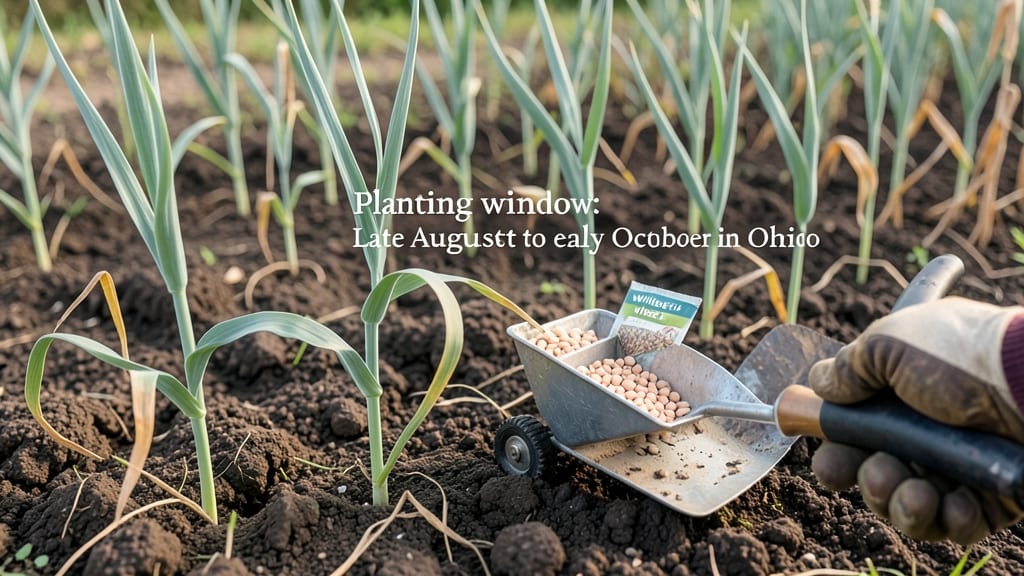
Planting winter wheat in Ohio between September and October sets the stage for a high-yield harvest the following summer, but timing is everything.
Ohio’s unpredictable winters can make or break your winter wheat harvest—plant too early, and frost will kill seedlings; too late, and yields suffer. Timing is everything, and USDA zones 5-7 demand precision.
Most Ohio growers aim to plant 4-6 weeks before the first hard frost, which typically hits around mid-November. This window ensures strong root development before winter dormancy, giving your 🌾 winter wheat the best chance to thrive.
In this guide, I’ll break down the exact planting deadlines for your USDA zone, soil prep tips, and how to adjust for Ohio’s microclimates—so you can avoid common mistakes and maximize your harvest.
Ohio winter wheat planting deadlines by USDA Zone (5, 6, 7)
Ohio’s USDA zones 5-7 create a tight window for planting winter wheat—miss it, and your crop faces frost damage or poor yields. The key is planting 4-6 weeks before the first hard frost, when soil temps drop to 40°F or lower.
This rule ensures seedlings establish roots before winter dormancy begins.
Northern Ohio (Zone 5) has the shortest window, while southern Ohio (Zone 7) can extend planting slightly later. Local microclimates—like valleys or urban heat islands—can shift your deadline by 1-2 weeks.
Always check your last frost date (typically mid-November in Zone 5 to early December in Zone 7) and count backward.
Soil temperature is just as critical as air temperature. Winter wheat germinates best in soil between 50°F and 65°F. Use a soil thermometer to verify readiness—planting when temps drop below 50°F risks slow germination and weak seedlings. In Ohio, this usually aligns with late September to early October.
Here’s your zone-specific planting deadline based on Ohio’s average frost dates and the 40°F rule. Adjust for early frosts or warm microclimates by monitoring local weather forecasts.
To calculate your local planting deadline, use this formula: Subtract 4–6 weeks from your average first frost date. For example, if your area’s frost typically hits November 15, plant by October 15.
Check the National Weather Service or Ohio State University Extension for your county’s exact frost data.
Planting too early (before September 15) risks fall growth, which weakens roots before winter. Late planting (after October 15) may result in shorter stems and lower yields. Aim for 4–6 weeks before frost to balance root establishment and winter hardiness.
Verify soil readiness with a soil thermometer—ideal temps are 50°F–65°F. Cooler soils delay germination, while warmer soils (>70°F) can stress seedlings. In Ohio, this usually means planting in late September to early October, but adjust based on your zone and microclimate.
For Zone 5, prioritize early September planting to avoid frost. In Zone 7, you have until mid-October, but monitor soil temps closely. Use black plastic mulch to warm cold soils in early fall if needed.
Pro tip: Plant test rows 1–2 weeks before your deadline to gauge germination speed in your soil. This helps fine-tune future planting schedules and ensures you’re not caught off guard by early frosts.
Once planted, avoid fertilizing until spring—fall growth weakens winter survival. Focus on light irrigation if rainfall is scarce, and mulch with straw to protect seedlings from temperature swings. With precise timing, your winter wheat will thrive through Ohio’s winters and reward you with a high-yield harvest the following summer. 🌾
How to adjust planting dates for Ohio’s microclimates and soil conditions
Ohio’s diverse landscape—from the hilly Appalachian foothills to the flat plains of northwest Ohio—creates microclimates that can shift your winter wheat planting window by 2-4 weeks. A valley might stay frost-free 10 days longer than a hilltop, while poorly drained soil can delay planting until temps stabilize.
Understanding these factors helps you avoid seedling frost damage or stunted growth from late starts.
Elevation plays a critical role: every 1,000 feet gain drops temperatures by about 3.5°F, meaning higher areas in southeast Ohio (like Athens County) may need to plant 1-2 weeks earlier than northern zones.
Meanwhile, soil drainage determines whether your field is ready—clay-heavy soils stay cold longer, while sandy loams warm faster in late summer.
⚠️ callout warning ⚠️
❄️ Critical Mistake: Planting Based on Calendar Dates
Ohio’s first hard frost can vary by 3 weeks from one county to another. Relying on September 15 as a universal deadline risks planting too late in USDA Zone 5 (e.g., Ashtabula) or too early in Zone 7 (e.g., Cincinnati). Always check soil temperature (40°F+) and moisture levels before seeding.
🌱 Pro Tip: Use a soil thermometer—wheat seeds need 50°F+ for 5+ days to germinate reliably.
To test soil readiness, dig a 6-inch hole and check for two key factors: temperature and moisture. Use a soil thermometer to confirm 50°F+ at 2-inch depth—this is your minimum safe planting temp.
For moisture, squeeze a handful: it should crumble slightly (not stick together like clay) but not feel dry. Sandy soils dry out faster, so plant 1 week earlier in these areas.
Adjust your planting window using this 3-step rule:
- Zone 5 (e.g., Toledo, Youngstown): Aim for September 1–15 (earlier for high elevations).
- Zone 6 (e.g., Columbus, Dayton): Target September 15–October 1.
- Zone 7 (e.g., Cincinnati, Lexington): Plant October 1–15 to avoid winterkill. For low-lying areas (e.g., Grand River Valley), delay by 5–7 days to escape early frosts.
Common mistakes include overcrowding seeds in cool soils (reduces yield by 20%+) or skipping soil tests for pH (ideal: 6.0–7.5). Use a pH test kit—acidic soils (pH <5.5) stunt root growth.
Amend with lime 4–6 weeks before planting if needed. Drainage issues? Raised beds or tilling in compost can improve conditions for winter wheat.
Remember: Ohio’s winter hardiness depends on vernalization—wheat needs 4–6 weeks of cold temps (32–40°F) to trigger spring growth. Planting too late (after October 15) risks bolting (premature flowering) or poor grain fill.
For high-risk areas, use winter-hardy varieties like ‘Elmer’ or ‘2174’ and mulch with straw after emergence.
By accounting for elevation, drainage, and soil type, you’ll match your planting date to Ohio’s local microclimate—not just the USDA zone. This precision can boost your yield by 30% or more compared to guesswork. Start with a small test plot to fine-tune your timing before scaling up!