
Trees
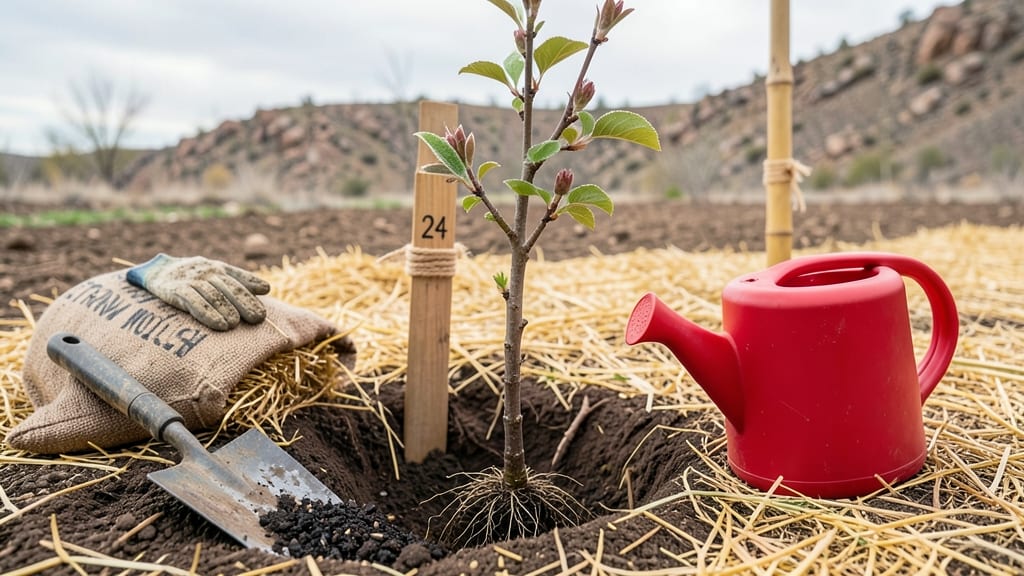
Planting fruit trees in Utah 🍎 means timing it right to beat the frost and match your variety to the chill hours your region needs.
Get it wrong, and you risk stunted growth or worse—your new tree meeting an early grave before it even bears fruit.
Utah’s climate swings from freezing winters to scorching summers, so knowing when to plant isn’t just a suggestion; it’s the difference between a thriving orchard and a sad, shivering sapling.
Most Utah gardeners plant in late winter to early spring or fall, but the exact window depends on your chill-hour zone.
Salt Lake City’s 6b needs apples that thrive in 500-800 hours of winter chill, while St. George’s 8a demands peaches that handle 300-500 hours—plant too early, and frost heave will kill your roots.
Below, I’ll break down the best months for each variety, soil prep tips for Utah’s alkaline dirt, and how to avoid the three biggest mistakes that doom fruit trees before they even take root.
Utah’s chill-hour zones: matching fruit trees to your location
Utah’s diverse climate creates distinct chill-hour zones, where the number of hours below 45°F in winter determines which fruit tree varieties will thrive. These zones range from 300 hours in warmer southern regions like St. George to over 1,200 hours in colder northern areas like Logan.
Choosing the right variety ensures your tree survives winter dormancy and produces fruit.
For example, peaches and nectarines need 300-500 chill hours, making them ideal for Utah’s southern desert areas, while apples and cherries require 600-1,200+ chill hours, perfect for the Wasatch Front and northern Utah. Matching your location to these zones prevents poor fruit set or winter dieback.
Here’s how Utah’s chill-hour regions break down and which fruit trees align with each:
| Chill-Hour Zone | Utah Regions | Best Fruit Trees | Planting Window |
|---|---|---|---|
| 300-500 | St. George, Cedar City, southern Utah | Peaches, Nectarines, Apricots, Figs | November-December (bare-root) |
| 500-700 | Provo, Spanish Fork, Heber Valley | Plums, Pears, Sweet Cherries, Early Apples | September-October or February-March |
| 700-900 | Salt Lake City, Ogden, Park City | Apples, Pears, Tart Cherries, Plums | September-October (fall) or March-April (spring) |
| 900-1,200+ | Logan, Cache Valley, northern Utah | Apples, Tart Cherries, European Pears, Hardy Plums | September-October (bare-root preferred) |
To find your exact chill-hour count, use the Utah Ag Weather chill-hour calculator (available via Utah State University Extension). Simply input your ZIP code to see precise chill-hour data for your county, then cross-reference with the table above to select the best fruit trees for your microclimate.
For example, if you’re in St. George (Zone 300-500), avoid planting high-chill apples like Honeycrisp, which require 800+ chill hours. Instead, opt for low-chill varieties like Redhaven peaches or Satsuma plums, which thrive with minimal winter chill.
In Salt Lake City (Zone 700-900), you can successfully grow Fuji apples or Bartlett pears, but avoid tropical fruit trees like citrus, which need zero chill hours. Always check the chill-hour requirements on the tree tag or nursery label before purchasing.
Timing your planting is just as critical as variety selection. In low-chill zones (300-500 hours), plant bare-root trees in late fall (November-December) to allow roots to establish before spring warmth triggers growth. In higher-chill zones (700+ hours), you can plant in fall (September-October) or early spring (March-April).
Pro tip: If you’re unsure about your chill-hour zone, observe your existing fruit trees. If they bloom early and produce poorly, you may be in a low-chill zone and need varieties with 300-500 hours.
If trees struggle with winter dieback, you’re likely in a high-chill zone and should prioritize 600+ hour varieties.
🌱
Best planting months for Utah fruit trees by variety
Utah’s dormant-season planting window is your best bet for fruit tree success, but the exact timing depends on the variety and your chill-hour zone.
Most gardeners in Salt Lake City (Zone 6b) and Ogden (Zone 7a) plant between September and November, while St. George (Zone 8a) gardeners must act by November to avoid winter heat stress.
Fall planting lets roots establish before winter, while early spring (February-March) works for cold-hardy varieties like cherries.
Utah’s alkaline soil (pH 7.5-8.5) can stunt root growth if not amended. Before planting, test your soil and adjust with sulfur or peat moss to lower pH to 6.0-6.5.
Mix in compost and organic matter to improve drainage and nutrient retention—critical for Utah’s clay-heavy soils in northern regions and sandy soils in the south.
- Apples & Pears: September-October (bare-root or container-grown). Varieties like Honeycrisp and Bartlett need 500-800 chill hours—ideal for Zone 6b-7a. Avoid planting after October 15 in northern Utah to prevent frost heave.
- Peaches & Nectarines: November-December (bare-root only). Southern Utah (Zone 8a) can plant until December 15, but northern areas must finish by November 15. Choose low-chill varieties like Redhaven (300-500 hours).
- Cherries (Sweet & Sour): February-March (bare-root). These need 500-1,000 chill hours and acidic soil (pH 5.5-6.5). Plant 2-3 weeks before last frost (typically mid-March in Salt Lake City). Use Montmorency for sour cherries.
- Plums & Apricots: October-November (bare-root). Stanley plums thrive in Zone 5-7 with 400-700 chill hours. Amend soil with lime if pH is too low, as plums tolerate 6.0-7.5.
- Fig Trees (Cold-Hardy Varieties): April-May (container-grown). Utah’s Zone 6b-7a supports Chicago Hardy figs. Plant after last frost date and protect young trees with burlap wraps during winter.
For container-grown trees, you can plant up to 2 weeks later than bare-root varieties, but avoid planting when soil temps exceed 80°F or drop below 40°F.
In St. George’s desert climate, prioritize drip irrigation and windbreaks to prevent transplant shock. Always water deeply 1-2 weeks before planting to reduce stress on roots.
Mulch newly planted trees with 3-4 inches of wood chips to retain moisture and regulate soil temperature. Keep mulch 6 inches away from the trunk to prevent rot. In northern Utah, add a 10-inch layer of straw over the root zone for extra winter protection.
Avoid synthetic mulches, which can raise soil temps dangerously in summer.
After planting, stake trees taller than 6 feet to prevent wind damage, especially in exposed sites like Utah’s Wasatch Front. Prune dead or crossing branches immediately, but avoid heavy pruning—save that for dormant season the following winter.
Fertilize lightly with balanced 10-10-10 in early spring to encourage root growth without overstimulating top growth.
Timing is everything in Utah’s variable climate. By matching your variety to the chill-hour zone and planting during the optimal dormant window, you’ll give your fruit trees the best shot at thriving.
Start with apples in fall, then move to stone fruits in late fall, and save cherries for early spring—your future orchard will thank you! 🍎🌳