
Plants
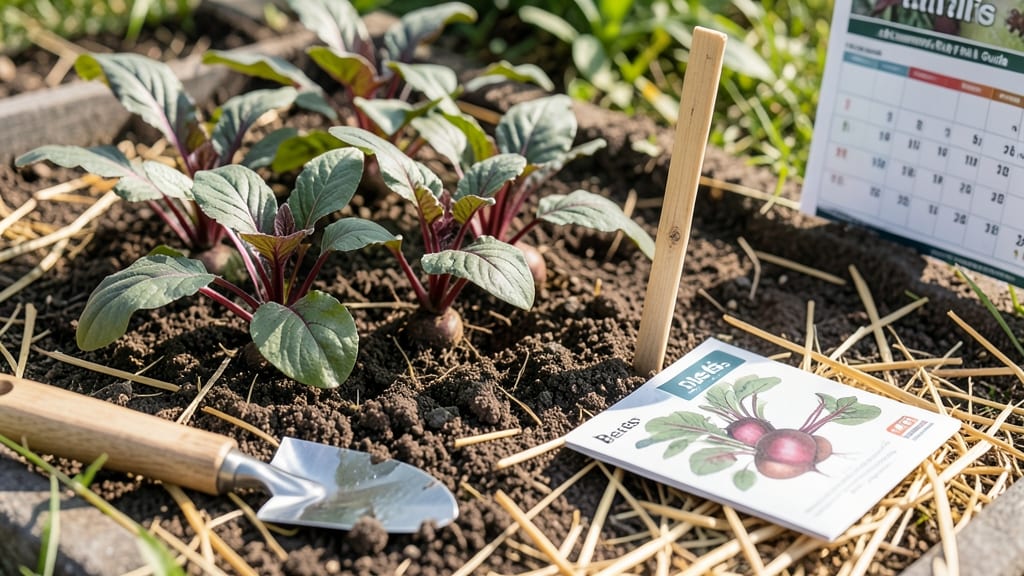
Planting beets in the fall for sweeter, tender roots requires timing them just right—6-8 weeks before your first frost is the magic window.
Fall beets are sweeter, more tender, and less woody than their spring counterparts—but timing is everything. Plant too early, and you’ll miss peak harvest; too late, and frost ruins your crop. Here’s the exact schedule to grow restaurant-quality beets every autumn.
In USDA Zone 6a, that means starting seeds in late July or early August, giving them 60-70 days to mature before the first frost hits in mid-November. The key is balancing soil warmth and cooler air to speed up growth without bolting.
Below, I’ll break down the 6-week pre-frost rule, how to adjust for your zone, and the best varieties for fall planting—plus how to protect your crop from early frosts and extend harvests into winter.
Fall beet planting timeline: 6-Week rule for frost-ready harvests
Mastering the 6-week pre-frost rule is the secret to growing sweet, tender fall beets that reach maturity before winter sets in.
Beets need 60-70 days to grow from seed to harvest, so timing your last planting 6 weeks before your first expected frost ensures you’ll pull perfectly sized roots before temperatures drop below 25°F. This window balances growth speed (cooler soil actually speeds up beet development) with frost protection.
The USDA zone you live in dramatically shifts your planting deadline. In Zone 3 (e.g., Minneapolis), your last planting window closes by mid-August, while gardeners in Zone 10 (e.g., Miami) can sow beets until mid-October.
Local first-frost averages are your best guide—check your USDA Plant Hardiness Zone Map and add 6 weeks to calculate your final planting date.
Here’s the science behind the 6-week rule: Beets grow faster in cooler soil (50–65°F), so late-summer heat slows them down. Planting 6 weeks out accounts for this lag while ensuring roots don’t get woody or bolt before frost.
For example, if your first frost is November 15, your last sowing should be by September 25 to guarantee a harvest before temperatures plummet.
🌱
| USDA Zone | Last Planting Window | First Frost Date | Beet Variety Recommendation |
|---|---|---|---|
| Zone 3 (e.g., Minneapolis) | Mid-July to August 15 | October 15 | 'Detroit Dark Red' (60 days) |
| Zone 4 (e.g., Chicago) | Late July to August 25 | October 5 | 'Golden' (55 days) |
| Zone 5 (e.g., New York) | Early August to September 5 | October 20 | 'Chioggia' (58 days) |
| Zone 6 (e.g., Philadelphia) | Late August to September 15 | November 5 | 'Bull’s Blood' (65 days) |
| Zone 7 (e.g., Atlanta) | Mid-August to October 5 | November 15 | 'Detroit Dark Red' (60 days) |
| Zone 8 (e.g., Dallas) | Late August to October 15 | December 1 | 'Lutèce' (50 days) |
| Zone 9 (e.g., Los Angeles) | September to October 30 | December 15 | 'Babybeat' (45 days) |
| Zone 10 (e.g., Miami) | October to November 15 | January 1 | 'Early Wonder Tall Top' (50 days) |
To calculate your personal planting deadline, start with your local first-frost date (find it via the National Oceanic and Atmospheric Administration (NOAA) or your local cooperative extension service). Subtract 6 weeks to land on your last sowing date.
For example, if frost hits October 30 in your area, your final planting should be by September 10. Pro tip: Use succession planting every 2 weeks after your first sowing to stretch harvests through fall.
Regional microclimates can shift these deadlines by 1-2 weeks. Coastal areas (e.g., San Francisco) often have later frosts than inland zones, while high-altitude gardens (e.g.,
How to adjust your fall beet schedule for soil temperature and variety
Cooler soil in fall actually speeds up beet growth compared to summer heat, thanks to slower microbial activity that preserves soil moisture. Beets thrive in 55-75°F soil—ideal for late summer/early fall planting.
I test soil temp by burying a thermometer 2 inches deep; if it’s below 60°F, it’s perfect for fall beets.
Your variety choice makes or breaks fall success. Short-season types like 'Detroit Dark Red' (58 days) and 'Golden' (55 days) mature faster than long-season varieties. Cold-hardy types like 'Chioggia' (60 days) survive light frosts, while tender varieties like 'Babybeat' need protection.
Soil temperature directly impacts growth speed. Warmer soil (>75°F) causes bolting, while cooler soil (<50°F) stunts roots. The sweet spot is 60-70°F—ideal for fall planting in most zones. Use a soil thermometer to monitor; adjust planting dates if temps stray.
⚖️ Pros and Cons of Fall Beet Planting Timing
✅ Planting 6-8 Weeks Before Frost
- Sweeter roots from cooler temps
- Faster growth in ideal soil temps
- Less bolting risk than summer
- Extended harvest through fall
❌ Planting Too Late
- Frost damage before maturity
- Woody roots from slow growth
- Limited harvest window
- Higher pest risk in late season
For succession planting, stagger sowings every 2 weeks from late July to early September. This ensures a continuous harvest until frost. In USDA Zone 6a, my last planting is August 15—just 6 weeks before the average November 15 frost.
Cold-hardy varieties like 'Bull’s Blood' tolerate 20°F frosts, while tender types like 'Lutz Winterkeeper' need row covers. Always check your variety’s cold tolerance before planting. I’ve had success growing 'Detroit Dark Red' under lightweight frost cloth for extended harvests.
Adjust your schedule by 2 weeks earlier for cooler zones (3-5) and 2 weeks later for warmer zones (7-10). In Zone 7, I plant until September 1—just 50 days before frost. Use local frost dates from Almanac.com to calculate your exact window.