
Fertilization
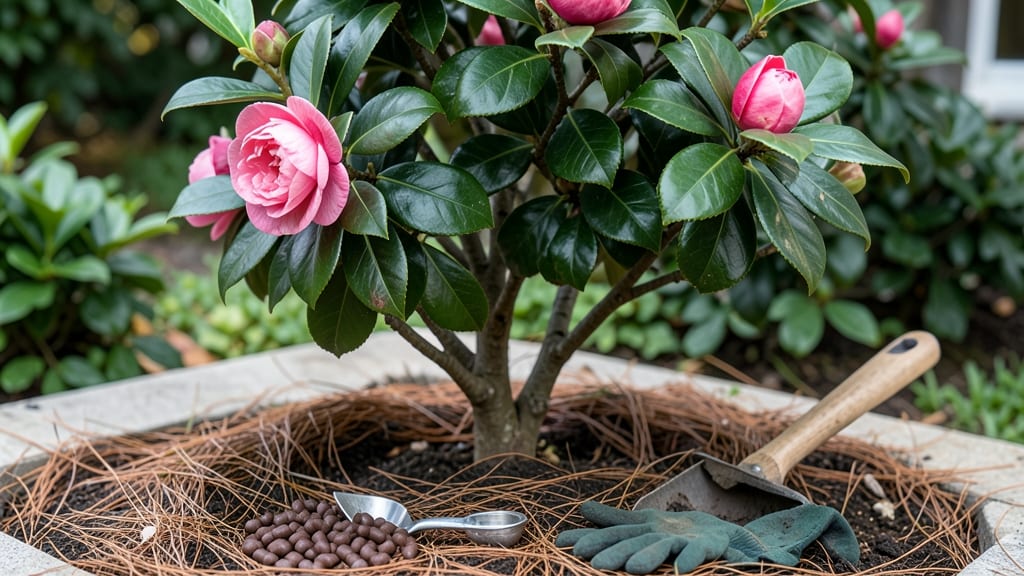
Fertilizing camellias in Georgia between late winter and early spring unlocks their most stunning blooms 🌸 — a critical window that most gardeners miss.
Picture this: You’ve spent months nurturing your camellia, only to see sparse flowers or leggy growth. The problem? Fertilizing too early or too late throws off their natural cycle, especially in Georgia’s humid, fast-growing climate. I’ve seen it happen more than once—even to seasoned gardeners who swear by "spring feeding."
Timing matters because camellias bloom on old wood, meaning last year’s growth fuels this year’s flowers. Feed them too soon, and you risk soft, floppy stems that won’t support heavy blossoms. Too late, and you’re playing catch-up with weak roots struggling to establish.
Here’s what you’ll learn: the exact 4-week window to fertilize in Georgia’s 7b-8b zones, how to adjust for your soil type (clay? sandy?), and the one trick that doubles bloom size without burning your plants.
Optimal fertilization timeline for Georgia camellias: late winter to early spring breakdown
Georgia’s humid subtropical climate creates perfect conditions for camellia growth, but timing fertilization is critical to avoid overfeeding or nutrient burn. The late-winter to early-spring window (February through April) is when your camellias wake from dormancy and prepare for blooming season.
Missing this window can result in smaller flowers or leaf-only growth instead of vibrant blooms.
Georgia’s two distinct climate zones—coastal (Zone 8a) and Piedmont (Zone 7b)—require slight adjustments. Coastal areas have warmer winters and longer growing seasons, while Piedmont regions experience cooler temperatures and shorter active periods.
I’ll break down the month-by-month schedule for both zones, plus how to choose between organic and synthetic fertilizers.
Camellias thrive on acid-loving fertilizer with a balanced NPK ratio (like 8-4-8 or 10-5-10). In Georgia’s rich but sometimes alkaline soil, acidifying fertilizers (such as cottonseed meal or peat-based blends) are essential.
The key is to feed lightly in early spring, boost during bud formation, and taper off as blooms fade to avoid late-season growth that won’t harden off before winter.
In late February, coastal gardeners should apply a light acid fertilizer (½ strength) to stimulate root growth before buds form. Piedmont gardeners wait until mid-March due to cooler temperatures. Use organic options like cottonseed meal for slow-release nutrients or synthetic 8-4-8 blends for quicker results. The NPK ratio is critical—too much nitrogen (first number) will produce leaves over blooms.
By March, both zones enter peak blooming season. Apply full-strength fertilizer every 4 weeks using either slow-release granules or liquid feeds. For organic gardeners, compost tea or fish emulsion works well. Synthetic fertilizers like Miracle-Gro for Acid-Loving Plants are convenient but may require more frequent applications.
Always water thoroughly after fertilizing to prevent root burn.
As April arrives, reduce fertilization to a light feed or stop entirely. This prevents soft new growth that won’t survive Georgia’s summer heat or fall frosts. Instead, focus on mulching with pine straw or pine bark to retain moisture and acidify the soil naturally.
Coastal areas may need additional watering due to higher evaporation rates.
From May through October, camellias enter a dormant-like state in Georgia’s heat. Avoid fertilizing entirely—this period is for recovery and root strengthening.
Instead, prune dead blooms and thin crowded branches to improve airflow. Potted camellias may benefit from a light organic feed in early fall to prepare for next year’s blooms, but in-ground plants should remain undisturbed.
For newly planted camellias, delay fertilization until the second spring after planting
Signs your Georgia camellia needs fertilizer (and when to adjust timing)
Your Georgia camellia might be silently screaming for nutrients if you notice yellowing leaves between the veins—a classic sign of nitrogen deficiency. This is especially common in sandy soils where nutrients wash away faster during Georgia’s heavy spring rains.
I’ve seen this happen to my Sasanqua camellias after a winter with below-average rainfall, where the soil simply couldn’t retain enough nutrients for new growth.
Another red flag? Sparse or small blooms despite your plant’s usual vigor. Camellias rely on stored nutrients from last year’s growth to produce flowers, so if they’re putting out half the usual blossoms, it’s time to reassess your fertilizer timing.
In my garden, a 5-year-old camellia that typically covered itself in pink blooms suddenly produced only a handful—until I adjusted my spring feeding schedule to match its growth cycle.
🌿
⚠️ Critical Timing Warning
Georgia’s humid climate creates a 4-week fertilization window—any earlier or later, and you risk burning roots or encouraging weak growth. For established camellias, fertilize February 15–March 15 (after last frost). Newly planted camellias need a delayed schedule: wait 6–8 weeks after transplanting before first feeding, then follow the same window.
⚠️ Pro Tip: If your soil is clay-heavy (common in Piedmont GA), fertilize 2 weeks earlier—nutrients bind tightly and release slower.
Slow growth is another tell-tale sign your camellia needs fertilizer, particularly if new shoots appear thin and leggy. This often happens when plants don’t get enough phosphorus (the middle number in NPK ratios), which is crucial for root and flower development.
In my coastal Georgia garden, I’ve noticed this pattern after summers with heavy rainfall leaching nutrients from the soil—so I now test soil pH and NPK levels annually to stay ahead.
Adjust your timing based on plant age: Young camellias (under 3 years) need lighter, more frequent feeds (every 6 weeks) with half-strength fertilizer, while mature plants can handle full-strength applications every 8–10 weeks.
I once over-fertilized a 2-year-old camellia in early February, and it produced burnt leaf tips by March—something I’ve never seen with older plants.
Don’t ignore pale green or purple-tinged leaves, either. These indicate magnesium or potassium deficiencies, respectively, which are common in acidic Georgia soils after repeated blooming.
To fix this, switch to a balanced fertilizer (like 10-10-10) in early March and pair it with Epsom salt (1 tbsp per gallon of water) for magnesium. I’ve revived multiple camellias this way in just 4–6 weeks of targeted feeding.
Finally, adjust your schedule after extreme weather. If Georgia had a drought year, your camellia’s roots may be stressed and starving—wait until late March to fertilize. Conversely, after a wet spring, nutrients leach faster, so you might need to feed 2 weeks earlier than usual.
I track rainfall data from the University of Georgia Extension to time my fertilizing perfectly each year.
🌸