
How To
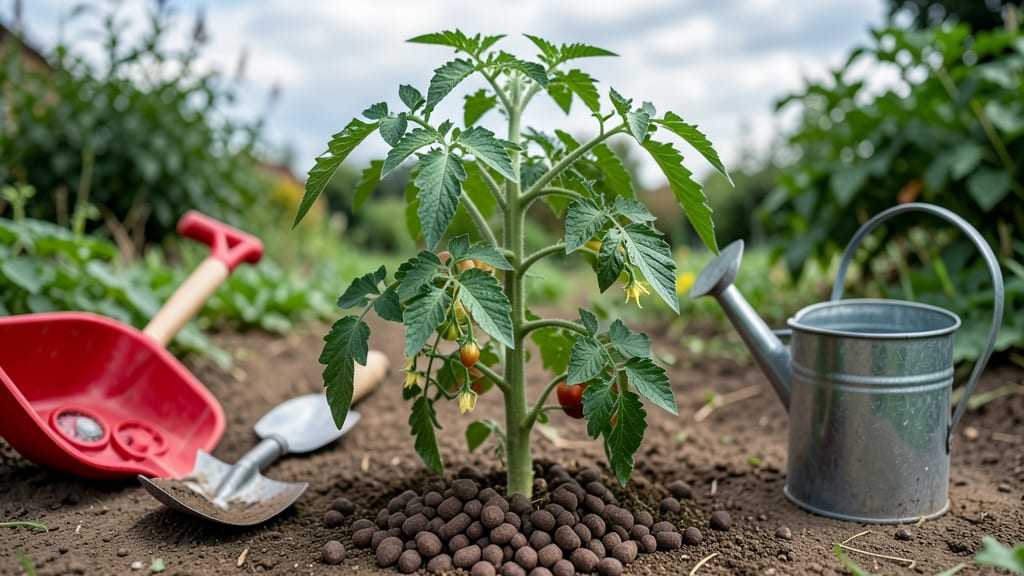
Fertilizing tomatoes at the right time boosts your harvest, but most gardeners mess up the timing—leading to weak plants or wasted nutrients.
Picture this: vibrant 🍅 vines heavy with fruit, then suddenly, the leaves yellow and the blossoms drop. That’s your plant screaming for help—or worse, begging for a break. The key is feeding them when they need it most, not just when you remember.
In this guide, I’ll walk you through the exact month-by-month schedule to fertilize tomatoes for maximum yield, whether you’re growing in pots or in the ground.
You’ll learn when to start, how often to feed, and when to stop—plus how to spot the signs when your tomatoes are begging for a nutrient boost.
Skip the guesswork and discover the game-changer for lush, productive tomato plants that reward you with bushels of flavorful fruit all season long.
Tomato fertilization timeline by growth stage: month-by-month breakdown
Fertilizing tomatoes at the right time is like giving your plants a perfectly timed energy boost—too early, and you stunt growth; too late, and you miss the fruiting window. The key is matching your fertilizer schedule to your tomato's growth stages, not just the calendar.
Most gardeners focus on summer feeding, but the real magic happens in spring root development and early flowering support.
Your tomato's nutrient needs shift dramatically from seedling to fruit-bearing plant. For example, young plants crave nitrogen for leaf growth, while flowering plants need phosphorus for blooms and potassium for fruit development.
Even the soil temperature affects when you should fertilize—cool soils slow nutrient uptake, while warm soils (above 60°F) make plants hungry for quick absorption.
Here's where most gardeners go wrong: they fertilize too heavily at planting or stop feeding when fruits appear. The truth? You should start light at transplanting, feed heavily during flowering, and taper off as fall approaches.
Regional differences matter too—gardeners in Zone 5 might start in May, while Zone 10 gardeners could begin in March.
| Growth Stage | Months (Zone 6a) | Fertilizer Type | NPK Ratio | Application Rate | Key Notes |
|---|---|---|---|---|---|
| Pre-Planting (Soil Prep) | March-April | Compost/Manure | N/A | 1-2 inches decomposed | Boost soil microbes 4-6 weeks before planting |
| Transplanting (Root Growth) | May | Balanced (5-10-10) | 5-10-10 | 1 tbsp per plant | Light feeding 2 weeks after transplanting |
| Early Vegetative (Leaf Growth) | June | High-Nitrogen (10-5-5) | 10-5-5 | 1 tbsp every 3 weeks | Encourage foliage for energy storage |
| Flowering (Bloom Support) | July | Bloom Booster (5-10-10) | 5-10-10 | 1 tbsp every 2 weeks | Increase phosphorus for fruit set |
| Fruiting (Heavy Production) | August-September | Fruit Builder (0-10-10) | 0-10-10 | 1 tbsp every 3 weeks | Shift to potassium for sweetness |
| Late Season (Pre-Frost) | October | None | N/A | N/A |
Signs your tomatoes need fertilizer (and when to avoid it)Your tomato plants are like hungry teenagers—they’ll show you exactly when they need a boost, but you’ve got to know what to look for. Yellowing leaves, stunted growth, or weak stems are classic signs your tomatoes are starving for nutrients. But here’s the catch: over-fertilizing can be just as deadly, causing leaf burn or blossom end rot that ruins your harvest before it even starts. The key is understanding the difference between a plant begging for food and one that’s already overfed. For example, yellow leaves with green veins usually mean nitrogen deficiency, while brown leaf edges often signal too much salt from fertilizer. I’ll show you how to tell these apart so you can feed your plants exactly what they need—when they need it. Timing matters just as much as what you feed them. Organic fertilizers like compost or fish emulsion release nutrients slowly, while synthetic granules work faster. That’s why I recommend side-dressing with compost every 4-6 weeks during the growing season, but holding off entirely in late summer when your plants start winding down for winter.
⚠️ When NOT to Fertilize Tomatoes
Avoid fertilizing tomatoes during these critical times:
Pro Tip: Always water plants before fertilizing to prevent root burn. Let’s start with the most obvious sign: stunted growth. If your tomato plants look like they’re barely growing despite full sun and regular water, they’re likely nitrogen-deficient. This is especially common in container-grown tomatoes, where nutrients get used up faster. Try a balanced 10-10-10 fertilizer or a quick fix with fish emulsion—just follow the package rates to avoid overdoing it. Another red flag is blossom end rot, where the bottoms of your tomatoes turn black and mushy. While this is often blamed on calcium deficiency, it’s usually caused by uneven watering or over-fertilizing with high-nitrogen feeds. The fix? Reduce fertilizer strength by half and maintain consistent moisture with mulch around the base to keep roots happy. Don’t ignore pale or purple leaves either—this signals phosphorus deficiency, which is crucial for flowering and fruiting. If your tomatoes are setting flowers but dropping them before they develop, it’s time for a phosphorus boost like bone meal or a 5-10-10 fertilizer. Apply it lightly around the roots and water it in well to activate the nutrients. Remember, the goal is steady growth, not rapid spikes. Over-fertilizing leads to soft, watery stems that can’t support heavy fruit, and excess salts in the soil block water absorption. For organic gardeners, I swear by a compost tea spray every 2 weeks during flowering—it’s gentle, nutrient-rich, and won’t burn your plants. 🌱 |