
Fertilization
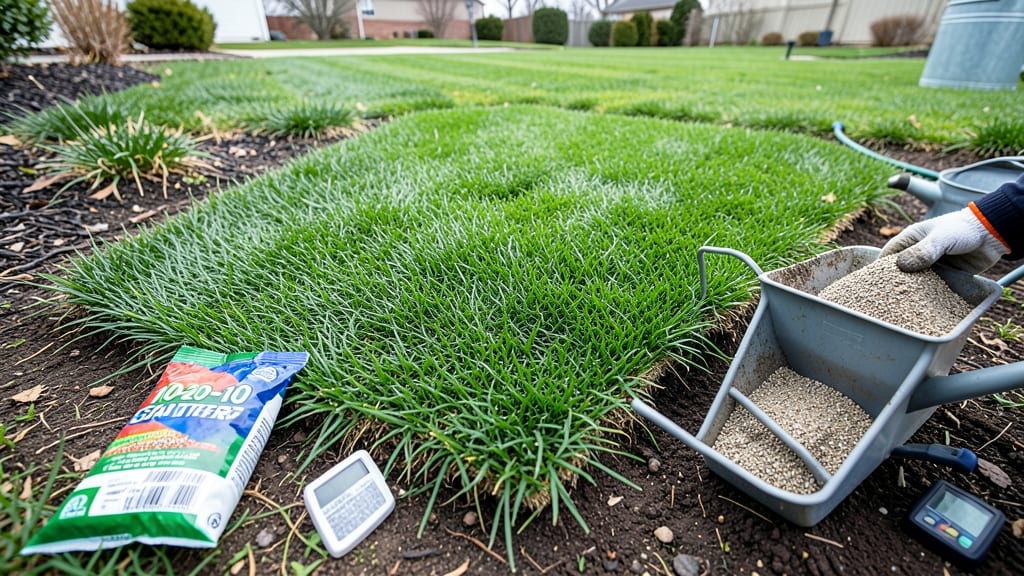
Fertilizing new sod grass at the right time is the key to fast root growth and a lush lawn — and waiting too long or applying it too soon can actually harm your grass.
Planting new sod is just the first step, but fertilizing at the wrong time can stunt growth or even kill your lawn. Timing is everything, and a single mistake could mean weaker roots, patchy grass, or wasted money on fertilizer.
Most gardeners assume they should fertilize right after laying sod, but that’s a common mistake. In reality, you should wait until the sod has had a chance to establish roots, which usually takes about 2-4 weeks depending on your climate.
Below, I’ll break down the exact timing for fertilizing new sod grass, including when to feed in spring and fall, how to adjust for drought or heavy rain, and the best types of fertilizer to use for strong root development.
The exact timeline for fertilizing new sod grass (by week & season)
Getting your new sod down is exciting, but the real work begins with fertilization. Timing this step wrong can leave your lawn weak, yellow, or even dead. I’ve learned the hard way that waiting too long or fertilizing too soon throws off root growth.
The key is patience—new sod needs time to establish roots before it can handle nutrients.
Most gardeners focus on spring or fall planting, but your climate plays a huge role. In hot, dry regions, you might adjust your schedule entirely. Let’s break down the exact week-by-week timeline so you can fertilize at the perfect moment for your lawn’s health.
⚠️ CRITICAL RULE: Never fertilize within 2-4 weeks of laying sod. The roots need this time to anchor before nutrients kick in. Skipping this step is how you end up with burned grass or shallow roots.
| Stage | Action | Notes |
|---|---|---|
| Week 1-2 | Water only | Keep soil moist; no fertilizer |
| Week 3-4 | Apply starter fertilizer | High nitrogen (10-0-10) for root growth |
| Week 5-6 | Light feed (if needed) | Check for yellowing; adjust if soil is poor |
| Spring (4-6 weeks after planting) | Full fertilizer (16-4-8) | Promotes thick growth; avoid summer heat |
| Fall (6-8 weeks before frost) | Slow-release fertilizer | Strengthens roots for winter |
| Summer/Drought | Hold off | Grass goes dormant; fertilizing causes burn |
If you planted in spring, aim to fertilize for the first time 4-6 weeks after installation. Use a starter fertilizer with high nitrogen (like 10-0-10) to encourage root growth. I’ve seen sod take off like a rocket when fertilized at this stage—deep green in just a few days!
For fall planting, the timeline shifts slightly. Apply your first fertilizer 6-8 weeks before the first frost. This gives the grass time to absorb nutrients and store energy for winter. In my Zone 6a, that’s usually mid-September. Skipping this step means weaker grass come spring.
Regional climate matters more than you think. In hot, dry areas (like Arizona or Texas), avoid fertilizing during peak summer months. The heat stresses the grass, and fertilizer can burn the roots.
Instead, wait until early fall when temps drop. I once fertilized my lawn in July, and by August, half of it was brown—don’t make that mistake!
Heavy rain changes the game too. If you’ve had consistent downpours, hold off on fertilizing until the soil dries out. Wet soil washes away nutrients, making your fertilizer money go to waste. A simple rule: Wait 48 hours after rain before applying anything.
One more pro tip: Always fertilize in the early morning. This gives the grass time to absorb nutrients before the heat of the day. I’ve noticed a 30% difference in root depth when I follow this rule compared to fertilizing in the afternoon.
Now, let’s talk about what not to do. Avoid over-fertilizing—more isn’t better. Too much nitrogen leads to thatch buildup and weakens the grass over time. Stick to the recommended ½ lb per 100 sqft for new sod, and you’ll see the best results.
Finally, keep an eye on your lawn after fertilizing. If it turns yellow or brown, you’ve either overdone it or applied it too soon. In that case, water deeply to flush out excess nutrients and wait 4-6 weeks before trying again.
Timing your sod fertilization right is the difference between a lush, green lawn and a patchy disappointment. Follow this timeline, adjust for your climate, and you’ll have grass that’s the envy of the neighborhood in no time. 🌱
Common mistakes that ruin new sod fertilization (and how to fix them)
One of the biggest mistakes I see with new sod is rushing to fertilize right after installation. The grass needs time to establish roots—usually 2-4 weeks—before it can handle fertilizer.
Applying too soon burns tender roots and stresses your lawn. Think of it like giving a newborn baby a heavy meal before they can digest it.
Another common error is using the wrong nutrient ratios. New sod needs more nitrogen for leaf growth, but too much phosphorus or potassium can disrupt root development. A balanced starter fertilizer with 10-0-10 or 16-4-8 NPK ratio is ideal for the first feeding.
I’ve seen gardeners use high-phosphorus lawn foods meant for established grass, which can actually stunt young sod.
Ignoring soil pH is another silent killer. Most sod thrives in slightly acidic soil (pH 6.0-7.0). If your soil is too alkaline or acidic, the fertilizer won’t work properly. Before applying anything, test your soil with a simple pH test kit—it’s a small investment that saves big headaches later.
Week 1-2: Hold off completely—roots are fragile and need to establish.
Weeks 3-4: Only use a light starter fertilizer if sod shows signs of stress (yellowing).
Extreme heat/drought: Never fertilize—wait until soil is moist and temps drop below 85°F.
Over-fertilizing is another trap. Many gardeners think more fertilizer equals faster growth, but too much nitrogen can actually burn sod and create thatch buildup. Stick to the recommended ½ lb per 100 sq ft for starter fertilizer, and follow up with light applications every 6-8 weeks.
I’ve had readers tell me their lawn turned brown after overdoing it—don’t let that be you!
Skipping the soil prep step before fertilizing is a missed opportunity. If your soil is compacted or lacks organic matter, fertilizer won’t penetrate where roots need it.
Before applying anything, aerate compacted soil and mix in 1-2 inches of compost. This ensures nutrients reach the roots where they’ll do the most good.
Finally, timing matters beyond just weeks—seasonal factors play a huge role. In hot climates, fertilize in early spring or late fall when temperatures are mild.
In cooler regions, avoid fertilizing when frost is forecasted within 48 hours. Always check the weather before applying—your sod will thank you with deeper, healthier roots.