
How To
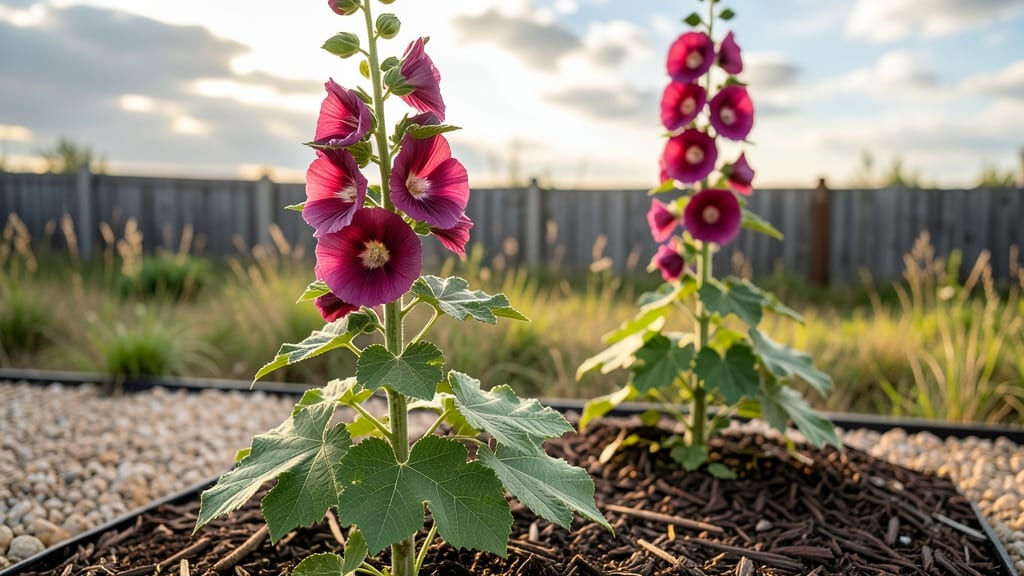
Hollyhocks grow anywhere from 3 to 8 feet tall, depending on the variety, with some towering giants reaching over 10 feet when given the right conditions.
If you’ve ever planted these striking 🌸 flowers only to watch them shoot up unexpectedly, you’re not alone. Their dramatic height can make or break your garden layout—whether you’re dreaming of a cottage-style border or need compact blooms for containers.
The key to controlling their growth lies in choosing the right variety. Dwarf types stay between 2 and 4 feet, perfect for small spaces, while standard varieties can stretch toward the sky. Sunlight, soil, and pruning all play a role in how tall your hollyhocks will grow.
Below, I’ll break down the height ranges of popular varieties, share spacing tips to prevent overcrowding, and reveal the secrets to keeping them sturdy—so you can enjoy their beauty without the chaos.

Hollyhock height ranges: dwarf to giant varieties explained
Hollyhocks are famous for their towering blooms, but their mature heights vary dramatically depending on the cultivar and growing conditions. From dwarf varieties perfect for containers to giant hollyhocks that reach fence height, understanding these ranges helps you plan your garden layout effectively.
Most hollyhocks fall between 3 to 12 feet at maturity, with some reaching even higher under ideal conditions.
The height of your hollyhocks isn't just about aesthetics—it impacts spacing requirements, support needs, and even bloom longevity. Taller varieties often need staking or trellises to prevent flopping, while dwarf types thrive in small spaces without extra support.
Let's explore the full spectrum of hollyhock heights so you can choose the perfect variety for your garden.
| Variety | Height Range | Growth Habit | Best For |
|---|---|---|---|
| Dwarf Varieties | 2–4 ft | Single or multi-stemmed | Containers, borders, small gardens |
| 'Black Night' | 3–5 ft | Multi-stemmed | Cut flowers, cottage gardens |
| 'Choc'late Soldier' | 4–6 ft | Single-stemmed | Back of borders, focal points |
| Semi-Dwarf | 4–6 ft | Multi-stemmed | Mixed borders, pollinator gardens |
| 'Peach Blow' | 6–8 ft | Single-stemmed | Cutting gardens, tall backdrops |
| Standard | 6–8 ft | Multi-stemmed | Cottage gardens, cottage-style plantings |
| Giant Varieties | 8–12 ft | Single-stemmed | Large gardens, trellises, privacy screens |
The dwarf varieties like 'Lady of the Lake' stay under 4 feet, making them ideal for container gardening or window boxes. These compact hollyhocks produce vibrant blooms without requiring extra space, though they may need light staking in windy areas.
Their multi-stemmed growth creates a lush, bushy appearance, perfect for adding color to small gardens.
Moving up the height spectrum, semi-dwarf varieties like 'Choc'late Soldier' reach 4 to 6 feet and strike a balance between manageable size and dramatic height. These are excellent choices for border plantings where you want vertical interest without overwhelming neighboring plants.
Their single-stemmed growth often produces larger individual blooms, making them stand out in mixed flower beds.
Standard hollyhocks (6–8 feet) are the most common in cottage gardens, offering a perfect blend of height and manageability. Varieties like 'Peach Blow' produce sturdy stems that support large, showy flowers, making them ideal for cut flower arrangements. Their multi-stemmed growth creates a natural, full look that thrives in full sun conditions. For best results, plant these 18–24 inches apart to allow airflow and prevent disease.
At the top end of the spectrum, giant hollyhocks can reach 10 to 12 feet, making them architectural stars in large gardens. These varieties often require strong trellises or stakes to support their tall, single stems.
While their massive blooms are stunning, they need ample space—plant them 3 to 4 feet apart and consider their mature size when designing your garden layout.
One key factor that influences height is the growth habit—whether a hollyhock is single-stemmed or multi-stemmed. Single-stemmed varieties like 'Black Night' grow taller but produce fewer stems, while multi-stemmed types like 'Peach Blow' create a fuller, bushier appearance with multiple blooms per plant.
Understanding this distinction helps you choose the right variety for your garden style and design goals.
For urban gardens or small yards, consider dwarf or semi-dwarf varieties that stay under 6 feet. These work beautifully in raised beds or large containers, adding vertical interest without taking up much space.
In contrast, rural or cottage-style gardens can accommodate the tallest varieties, using them as natural screens or backdrop plants for other flowers.
When selecting hollyhocks, also consider
How to choose hollyhock heights for your garden layout
When planning your garden, hollyhock heights can make or break your design. Tall varieties (6-10 feet) create stunning focal points, while dwarf types (2-4 feet) fit snugly into borders. The key is matching their mature size to your space and support capabilities—whether that's self-supporting stems or sturdy garden stakes.
Let's break down how to choose the perfect height for your layout while keeping your garden both functional and beautiful.
Start by measuring your garden beds and noting any existing structures. Standard hollyhocks (6-8 feet) need at least 2-3 feet of space around them to avoid crowding neighboring plants. In smaller gardens, semi-dwarf varieties (4-6 feet) are ideal—they still add height without overwhelming the space.
For cottage gardens, mix heights: place tall hollyhocks (8-10 feet) behind shrubs and shorter varieties in front to create layers.
- 🌱 Dwarf Hollyhocks (2-4 ft)
- ✅ Perfect for front borders or container gardens
- ✅ No staking needed—self-supporting stems
- ✅ Pair with lavender, salvia, or coreopsis for contrast
- 🌿 Semi-Dwarf (4-6 ft)
- ✅ Ideal for mixed borders or cutting gardens
- ✅ Light staking may be needed in windy areas
- ✅ Combine with delphiniums or foxgloves for height variety
- 🌳 Standard (6-8 ft)
- ✅ Best for back borders or focal points
- ✅ Requires staking or trellises for support
- ✅ Plant behind roses or peonies for layered depth
- 🪴 Giant (8-10+ ft)
- ✅ Dramatic for large gardens or trellises
- ✅ Needs heavy-duty support (e.g., metal stakes or obelisks)
- ✅ Pair with clematis or climbing roses for vertical interest
For border planting, space dwarf and semi-dwarf hollyhocks 18-24 inches apart to allow airflow and prevent disease. In cottage gardens, alternate heights every 2-3 feet to create a natural, undulating effect.
If you're using tall varieties near walkways, consider placing them against fences or walls to avoid blocking sunlight for shorter plants.
Support is critical for hollyhocks over 5 feet tall. Self-supporting varieties like 'Lady Elizabeth' can stand alone, but most benefit from individual stakes or rings inserted at planting. For giant varieties, use 3-4 stakes per plant tied gently with soft twine to avoid damaging stems.
Pro tip: Plant stakes at the same time as seeds to avoid disturbing roots later.
Design tip: Use color coordination to tie heights together. For example, pair tall purple hollyhocks with dwarf pink ones in the same bed for a cohesive look. In cutting gardens, taller varieties provide stems for arrangements, while shorter ones add texture.
Always leave 12-18 inches of clearance above hollyhocks to accommodate their full height and blooms.
Remember, hollyhocks grow 1-2 feet taller each year after establishment. If space becomes tight, prune back 1/3 of the stems in early spring to encourage bushier, shorter growth. This works especially well for overgrown varieties in established gardens.