
How To
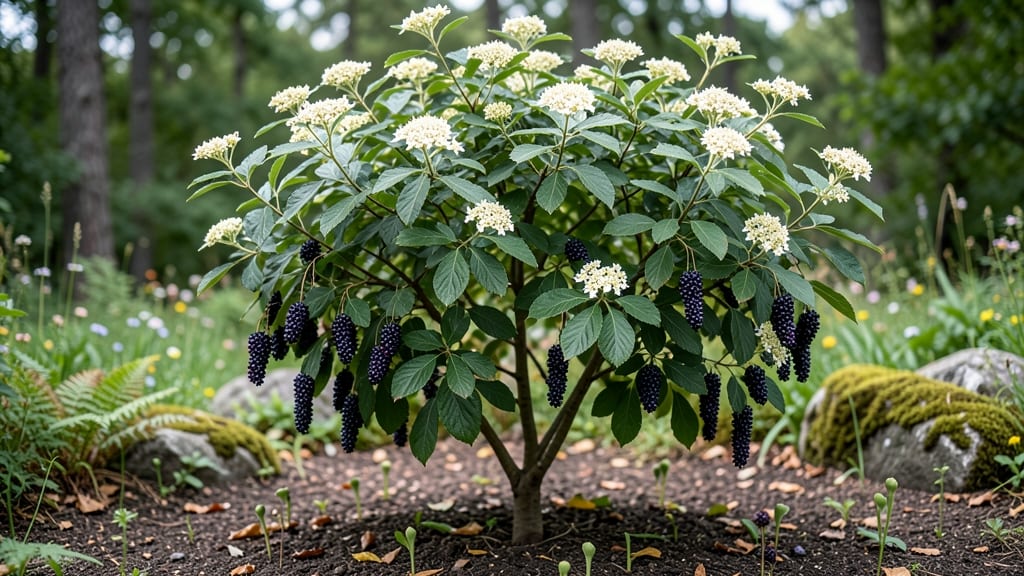
Elderberry plants grow between 6 and 12 feet tall, depending on the variety and growing conditions — a range that can make all the difference in your garden layout.
If you're dreaming of planting elderberries but wondering whether they’ll tower over your backyard or stay neatly contained, you’re in the right place. Some varieties, like 'Adams,' stay under 8 feet with proper pruning, while others, like 'Black Beauty,' can easily reach 12 feet or more if left unchecked.
This height variation isn’t just about aesthetics—it impacts everything from pruning strategies to whether you can use elderberries as a privacy screen or hedge. A 6-foot plant fits snugly in a small yard, while a 12-foot shrub needs space and might require a sturdy trellis to support its weight.
Below, I’ll break down the height differences by variety, how to control growth, and whether dwarf options exist for tighter spaces. You’ll leave here knowing exactly what to expect—and how to plan your garden around it.

Elderberry height by variety: from compact bushes to towering giants
Elderberries are one of those magical plants that can transform your garden—whether you want a privacy screen, a food-producing hedge, or just a stunning focal point. The catch? Their height varies wildly depending on the variety, pruning habits, and even your local climate.
Some elderberries stay as compact as a small shrub, while others stretch toward the sky like a small tree. Let’s break down the real-world heights you can expect from popular varieties.
If you’re planning your garden layout, knowing these height ranges helps you decide where to plant elderberries. For example, 'Adams' stays manageable at 6–8 feet, perfect for small yards, while 'York' can reach 10–12 feet, ideal for creating a natural fence.
Even within the same variety, factors like soil fertility, water availability, and pruning frequency can shift a plant’s height by 2–3 feet over time.
| Variety | Mature Height | Growth Habit | Best For |
|---|---|---|---|
| 'Adams' | 6–8 feet | Upright, multi-stemmed shrub | Small gardens, containers, hedges |
| 'York' | 10–12 feet | Tall, vigorous shrub | Privacy screens, large landscapes |
| 'Black Beauty' | 8–10 feet | Bushy, dense growth | Wildlife habitats, pollinator gardens |
| 'Blue Lake' | 6–9 feet | Compact, rounded shrub | Urban gardens, small spaces |
| 'Canadice' | 10–15 feet | Tree-like growth | Large properties, natural borders |
| 'Kemmer' | 8–10 feet | Upright, spreading | Food production, trellising |
Climate plays a surprising role in elderberry height. In cooler northern climates (USDA Zones 3–5), elderberries like 'York' often max out at 8–10 feet due to shorter growing seasons.
But in warmer southern zones (Zones 6–9), the same variety can easily hit 12 feet or more with abundant rainfall and rich soil. I’ve seen 'Canadice' elderberries in Zone 7 grow 3 feet taller than identical plants in Zone 5—just because of the extra heat and moisture.
For gardeners with limited space, 'Blue Lake' and 'Adams' are my top picks. These varieties stay under 9 feet even with minimal pruning, making them perfect for backyard hedges or even large containers.
I once grew 'Adams' in a 15-gallon pot for 3 years, and it never exceeded 5 feet—proof that elderberries can adapt to small spaces with the right care. Just be prepared to prune aggressively to keep them in check.
If you’re aiming for a privacy screen, 'York' or 'Black Beauty' are excellent choices. These varieties thrive when planted in a double-row hedge, where their natural spread (up to 6 feet wide) creates a dense, berry-laden barrier.
I planted 'York' elderberries in my Zone 6 garden 5 years ago, and today they form an unbroken wall at 10 feet tall, blocking noise from the road while providing hundreds of pounds of berries each season.
One common misconception is that elderberries always grow into unmanageable giants. While some varieties like 'Canadice' can reach 15 feet in ideal conditions, most standard elderberries top out at 8–12 feet with regular pruning.
The key is annual pruning in late winter to remove dead wood and shape the plant. I prune my 'Kemmer' elderberries every year, and they’ve stayed a neat 8 feet tall for over a decade—no wild overgrowth here!
For those who love vertical gardening, elderberries are fantastic candidates for trellises or arbors. Varieties like 'York' and 'Black Beauty' can be trained to grow upward, saving space while still producing abundant berries.
I built a 12-foot trellis in my garden last year and trained 'York' elderberries to climb it. Now, the berries hang at eye level, making harvests a breeze—and the plant stays half its usual width.
Before planting, check your local frost dates. Elderberries in warmer climates (like Zone 8+) may grow 1–2 feet taller
How to control elderberry height: pruning, trellising, and training tips
Elderberries can grow wildly if left unchecked, reaching 12 feet or taller in ideal conditions. But with the right techniques, you can keep them at a manageable 6-8 feet—perfect for hedges, privacy screens, or even container gardening.
The key lies in pruning timing, trellis support, and seasonal training. I’ll walk you through each method so you can shape your elderberries to fit your space—without sacrificing fruit production.
Start by understanding that elderberries grow fastest in spring and early summer, with most height gained in their first 3 years. If you act early, you can guide their growth before they become unruly.
For example, the 'York' variety naturally stays shorter, but even it will stretch taller if not pruned. The good news? You don’t need to be a pruning expert—just follow these steps to keep your plants in check.
Step-by-Step Guide to Controlling Elderberry Height
- Step 1: Prune in Late Winter – Cut back 1/3 of last year’s growth to encourage bushier, shorter growth. Use clean, sharp pruning shears and remove dead or crossing branches first.
- Step 2: Install a Trellis Early – Use a 6-foot tall trellis with sturdy posts (like T-posts) to support vertical growth. Train main stems to climb the trellis, reducing sprawl.
- Step 3: Pinch New Growth in Spring – When shoots reach 12-18 inches, pinch off the tips to promote side branching. This creates a fuller, shorter shrub.
- Step 4: Summer Pruning for Height Control – After fruiting, trim tallest stems back by 20-30% to prevent overgrowth. Avoid heavy pruning in late summer, as it stresses the plant.
- Step 5: Mulch & Fertilize Strategically – Apply 2-3 inches of mulch around the base to suppress weeds and retain moisture. Use a balanced fertilizer (10-10-10) in early spring, but avoid over-fertilizing, which fuels rapid (and tall) growth.
- Step 6: Annual Maintenance in Fall – Remove suckers (shoots growing from the base) and any weak or diseased branches. This keeps the plant focused on fruit production rather than vertical growth.
For small spaces, consider container growing with dwarf varieties like 'Adams', which maxes out at 6-8 feet with proper pruning. Use a large pot (20+ gallons) and prune aggressively in spring to keep it compact.
If you’re growing elderberries as a hedge, space plants 4-5 feet apart and shear lightly after fruiting to maintain uniformity.
One common mistake is pruning too late in the season, which can stimulate new growth that won’t harden off before winter. Always prune before buds swell in late winter (February-March in most climates).
Another tip: If your elderberries are already too tall, don’t panic—focus on annual pruning to gradually reduce height over 2-3 years. Patience pays off!
With these techniques, you’ll enjoy manageable elderberries that produce abundant berries without dominating your garden. Whether you’re aiming for a 6-foot hedge or a 12-foot privacy screen, control is entirely in your hands. Happy pruning!