
How To
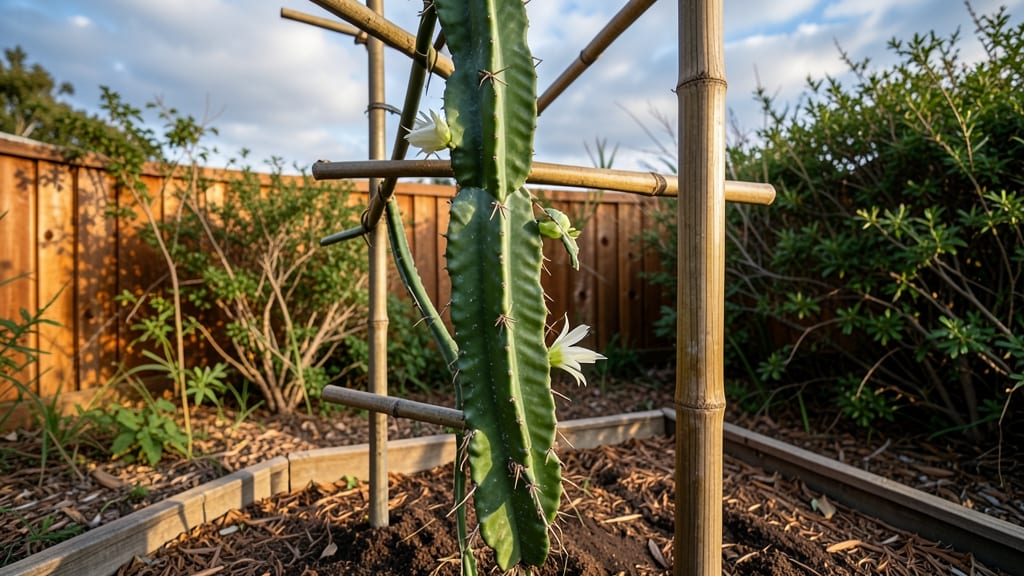
Dragon fruit grows between 6 and 20 feet tall, depending on the variety and support you provide—so yes, it can easily outgrow your backyard if left unchecked.
Dreaming of growing dragon fruit but worried about limited space? This tropical plant can thrive in small gardens—if you know the right varieties and care tips to control its height.
Without proper pruning or a trellis, standard varieties like Hylocereus undatus can stretch toward the sky, while dwarf types stay under 5 feet and are perfect for containers.
Below, I’ll break down how to manage height for bigger fruit yields in less space, plus the best compact varieties for urban gardens.

Average dragon fruit height by variety: what to expect in your garden
Dragon fruit (or pitaya) is a stunning tropical vine that can reach impressive heights—if you're not careful with variety selection and training. Standard varieties like Hylocereus undatus (red-fleshed) and Hylocereus polyrhizus (white-fleshed) often climb 15-20 feet when given proper support.
But don’t worry—there are compact options perfect for small spaces too!
Understanding your dragon fruit’s mature height helps you plan for support structures, pruning, and even container sizes. Without control, these vines can sprawl wildly, but with the right approach, you can keep them manageable while still enjoying a bountiful harvest.
Let’s break down what to expect by variety and how growth progresses over time.
🌱 Pro Tip: Dragon fruit grows fastest during spring and summer when temperatures stay between 70-90°F. In cooler climates, growth slows dramatically, which can affect final height.
Standard dragon fruit varieties like Hylocereus undatus can reach 20 feet tall when given a sturdy trellis or fence to climb. This variety thrives in USDA Zones 10-12 and produces bright pink fruits with red flesh.
Without proper support, it can sprawl up to 15 feet wide, making it ideal for larger gardens or greenhouses.
If you’re working with limited space, consider dwarf varieties like 'Baby Dragon Fruit,' which max out at 6-10 feet. These are perfect for containers or small trellises on patios or balconies. Even in containers, they’ll need a 5-gallon pot minimum and regular pruning to stay compact.
Growth rates vary by variety and climate. In ideal conditions (full sun, warm temperatures, and consistent moisture), dragon fruit can grow 3-5 feet per year during its first few years.
However, in cooler climates or containers, growth slows to 1-2 feet per year, which is why dwarf varieties are a game-changer for small spaces.
One common misconception is that dragon fruit grows like a tree. In reality, it’s a climbing cactus vine that needs support to reach its full height.
Without a trellis or cage, it may sprawl along the ground, reducing fruit production and making harvesting difficult. Always plan for vertical growth from the start!
For container gardening, choose varieties like Selenicereus megalanthus (yellow pitaya), which typically stays under <
Space-saving techniques: how to keep dragon fruit compact without sacrificing fruit
Dragon fruit’s natural climbing habit can turn your small garden into a jungle if you don’t guide its growth. The key to keeping it compact is understanding its growth patterns and using strategic pruning and support.
Without intervention, standard varieties like Hylocereus undatus can reach 15-20 feet, but with the right techniques, you can limit height to 6-8 feet while still enjoying a bountiful harvest.
Seasonal growth is another critical factor—dragon fruit grows most aggressively in spring and summer, so that’s when you’ll need to focus on containment. By combining pruning, trellising, and container gardening, you can redirect energy toward fruit production instead of vertical sprawl.
Let’s explore the best methods to keep your dragon fruit manageable.
- 1 Use a 5-6 foot trellis to limit vertical growth while encouraging horizontal spread, which boosts fruit production.
- 2 Prune new shoots in early spring to redirect energy to existing vines and fruit-bearing stems.
- 3 Choose dwarf varieties like 'Baby Dragon Fruit,' which max out at 4-5 feet and thrive in containers.
- 4 Pinch back tips of vines in late summer to slow height growth and encourage bushier, fruit-heavy branches.
- 5 Use 15-20 gallon containers with deep roots to restrict height while providing enough space for fruit development.
Pruning is your best tool for controlling height, but timing matters. In early spring, cut back any overgrown vines that exceed your desired height limit. Focus on removing the longest, non-fruiting stems first—these are the ones that’ll shoot up the fastest.
I recommend keeping 3-4 main vines per plant to maintain balance and fruit production.
Trellising is another game-changer for small spaces. A 5-6 foot tall trellis gives your dragon fruit just enough room to climb while keeping it manageable. Train the vines to grow horizontally along the trellis by gently tying them with soft plant ties.
This method not only saves space but also makes harvesting easier—fruits hang within arm’s reach! For containers, use a cage or spiral trellis to guide growth upward without taking up extra floor space.
Container gardening is perfect for urban gardeners with limited space. Opt for 15-20 gallon pots with drainage holes to accommodate the plant’s deep root system while restricting height. Place your container near a south-facing wall to maximize sunlight exposure, which is critical for flowering and fruiting.
Remember to repot every 2-3 years to refresh the soil and prevent root-bound stress.
Seasonal adjustments are key to keeping your dragon fruit compact year-round. During summer’s rapid growth phase, prune more aggressively to prevent uncontrolled sprawl.
In fall and winter, reduce watering and fertilizing to slow growth, allowing the plant to focus energy on establishing a sturdy structure for next year’s harvest. With these techniques, you’ll enjoy plentiful fruit without sacrificing your garden’s layout.