
Size
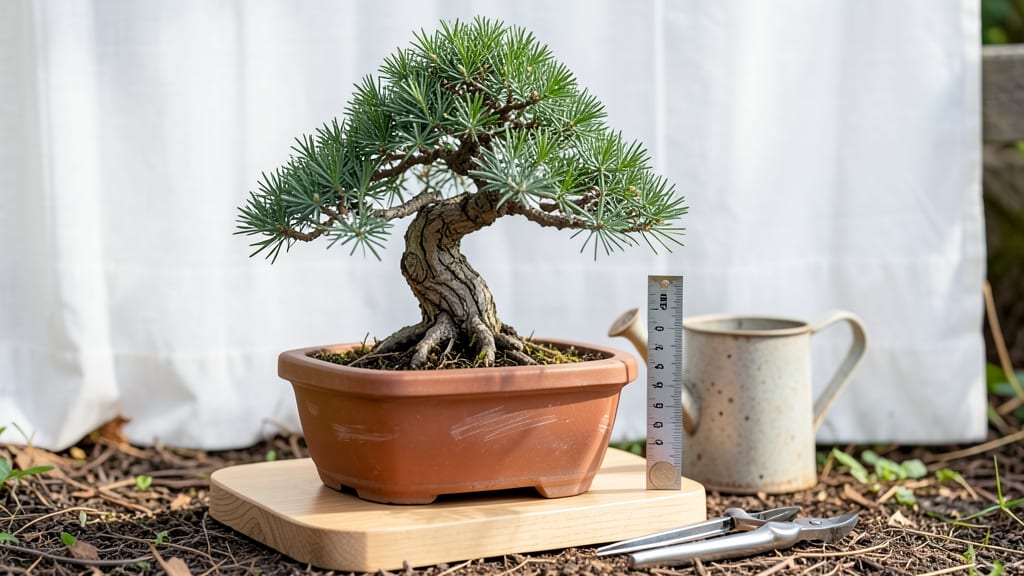
A bonsai tree’s height can vary dramatically—how tall does a bonsai tree grow depends on its species, training methods, and the care you provide. If you’ve ever dreamed of owning a bonsai but worried it might outgrow your space, you’re not alone—many beginners assume these trees stay tiny forever.
The truth? Bonsai height varies wildly, with some species like the Japanese Black Pine reaching tabletop heights while others, like the Azalea, stay compact for decades.
What you might not realize is that pruning, wiring, and repotting techniques are the real game-changers. A formal upright style keeps growth vertical, while a cascade style encourages downward branches, both shaping the final height.
Even the pot size plays a role—smaller containers restrict root growth, helping maintain that miniature look.
In this guide, I’ll break down the height ranges of popular bonsai species, how to control growth through training, and the five most common mistakes that make your bonsai grow taller than intended.
Whether you’re a beginner or a seasoned grower, these tips will help you keep your bonsai at the perfect height for your space.

Bonsai tree height by species: from tiny to tabletop giants
Choosing a bonsai tree often starts with one big question: how tall will it grow? The answer depends entirely on the species you select, with some staying under 6 inches while others can reach 3 feet in formal styles.
Even within the same species, growth rates vary based on age, care, and styling choices. Let’s break down the mature height ranges for popular bonsai varieties so you can pick the perfect fit for your space.
Most bonsai trees remain between 12 and 24 inches at maturity, but exceptions exist. For example, Japanese Azaleas often stay compact at 6–18 inches, while Black Pines can stretch toward 3 feet in formal upright styles.
Understanding these ranges helps you avoid surprises—like a Ficus bonsai that outgrows your coffee table or a Juniper that stays delightfully petite.
🌱
The Japanese Juniper is a classic choice for beginners because it stays compact at 12–24 inches and thrives with minimal fuss. Its needle-like foliage and rugged bark make it ideal for formal upright styles, where height is controlled through regular pruning.
If you’re after something slightly taller but still manageable, the Ficus bonsai often reaches 18–36 inches, making it perfect for indoor spaces with bright, indirect light.
For those who love seasonal color changes, Japanese Maples are a stunning option, though their height can vary dramatically. Some varieties stay under 12 inches, while others—like the Shishigashira—can grow to 3 feet in formal styles.
The key is selecting a dwarf variety or pruning aggressively to maintain your desired size.
🌿
If you’re aiming for a statement piece, the Black Pine is a bold choice, capable of reaching 48 inches in formal upright styles. These trees
How bonsai styles affect height: formal upright vs. cascade vs. Literati
Choosing a bonsai style isn’t just about aesthetics—it directly impacts how tall your tree will grow. The formal upright (Chokkan) style, for example, encourages vertical growth, often reaching 18–36 inches with proper pruning.
Meanwhile, cascade (Kengai) styles train branches to flow downward, creating an illusion of height while keeping the trunk shorter. Each style uses unique techniques like wiring, defoliation, and root pruning to control size.
Your bonsai’s final height depends on three key factors: the tree species, the style you choose, and your pruning discipline.
A Juniper bonsai in a formal upright style might stay compact at 12–24 inches, while the same species in a slanted (Shakan) style could stretch to 30 inches.
The Literati style, with its gnarled, horizontal branches, rarely exceeds 12 inches in height but demands advanced skills to maintain.
Bonsai Style Comparison: Height & Care
- Height: 18–36"
- Space Needed: Moderate
- Pruning: Frequent
- Best For: Beginners
- Height: 12–24"
- Space Needed: Tall shelves
- Pruning: Advanced
- Best For: Experienced
- Height: 6–12"
- Space Needed: Small
- Pruning: Highly skilled
- Best For: Artists
- Formal Upright: Classic look
- Cascade: Dramatic flow
- Literati: Unique artistry
- Formal Upright: Needs frequent pruning
- Cascade: Requires tall display
- Literati: Fragile branches
The Chokkan (formal upright) style relies on regular tip pruning and root restriction to maintain height. For example, a Ficus bonsai in this style might grow 1–2 inches per year if pruned correctly.
In contrast, the Kengai (cascade) style uses wiring techniques to train branches downward, often keeping the trunk shorter than the cascading foliage. This creates a visual height illusion while keeping the actual tree compact.
If you’re working with a Literati-style bonsai, expect minimal height—these trees prioritize horizontal growth and twisted trunks over vertical expansion. A Chinese Elm in this style might max out at 8–10 inches but require expert-level pruning to maintain its artistic form.
For beginners, I recommend starting with a formal upright Juniper—it’s forgiving and stays within 12–24 inches with consistent care.
Remember, height isn’t set in stone. Even a 3-foot cascade bonsai can be trimmed back to 18 inches with aggressive pruning. The key is balancing growth rate, style goals, and your available space.
For example, a cascade Ficus on a wall-mounted shelf can thrive at 24 inches, while the same tree on a coffee table might need to stay under 18 inches.
Before committing to a style, sketch your display space and measure potential bonsai heights. A Literati-style bonsai might fit on a desk corner, while a formal upright could dominate a mantelpiece. And always factor in future growthoutgrow its home if left unchecked for years.