
Trees
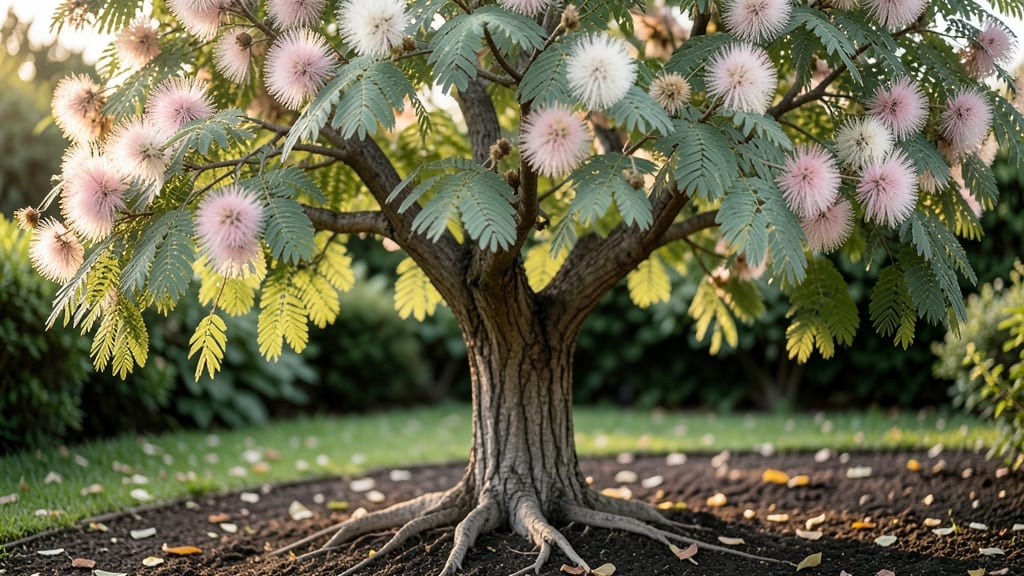
How tall do mimosa trees grow? They thrive with remarkable speed—up to 3 to 6 feet per year—but their mature height can vary wildly depending on where you live and how you care for them.
If you're dreaming of fast-growing shade trees that burst into fragrant pink blooms, mimosa trees might be your perfect match—but first, you need to know how tall they can grow and how quickly they'll fill your landscape.
In ideal conditions, these sun-loving 🌳 trees can reach heights of 20 to 40 feet, making them a stunning focal point in larger yards. However, in urban settings or with regular pruning, they can be kept much smaller, even as low as 8 to 12 feet.
Below, I’ll break down the key factors that influence their height—from soil and sunlight to pruning techniques—and help you decide if this fast-growing tree is the right fit for your space.

Mimosa tree height range: from small shrubs to towering canopies
If you're considering adding a mimosa tree to your landscape, understanding its height potential is crucial for planning.
The most common variety, Albizia julibrissin (often called silk tree or mimosa), typically grows between 20 to 40 feet tall at maturity, though some specimens can reach heights of 50 feet in ideal conditions. This fast-growing tree can add dramatic vertical interest to your yard within just a few years.
For those with limited space, don't overlook the dwarf varieties like Mimosa pudica, which stays much smaller at 3 to 6 feet tall. These compact options are perfect for containers or small gardens while still offering the signature fragrant pink blooms that make mimosa trees so popular.
The height difference between species means you can choose based on your specific landscape needs.
Now let's explore the height variations and growth patterns of different mimosa species in this detailed summary table:
| Species | Mature Height Range | Annual Growth Rate | Growth Habit |
|---|---|---|---|
| Albizia julibrissin (Standard) | 20-40 feet | 3-6 feet per year | Fast-growing, upright |
| Albizia julibrissin 'Pink Cascade' | 10-15 feet | 2-4 feet per year | Compact, spreading |
| Mimosa pudica (Sensitive Plant) | 3-6 feet | 1-2 feet per year | Bushy, shrub-like |
| Albizia julibrissin 'Silver Dollar' | 15-25 feet | 3 feet per year | Moderate, rounded |
As you can see, the standard Albizia julibrissin grows the tallest, making it ideal for large properties or as a shade tree in rural settings. This species can reach its maximum height of 40 feet within 10 to 15 years under optimal growing conditions.
The fast growth rate of 3-6 feet annually means you'll see dramatic changes in your landscape each year.
Your local climate plays a significant role in determining how tall your mimosa tree will grow. In warmer southern climates like USDA zones 7-10, mimosa trees thrive and can grow taller due to longer growing seasons.
However, in cooler northern zones (like zones 5-6), growth may be slower, with mature heights typically on the lower end of the range (closer to 20 feet).
The soil conditions in your garden also affect height potential. Mimosa trees prefer well-draining soil with a slightly acidic to neutral pH (6.0-7.0). In poor soil or compacted clay, growth may be stunted, resulting in a shorter tree.
Amending your soil with compost or organic matter can help promote healthier, faster growth and potentially taller specimens.
One important consideration for those planting mimosa trees is their spread. While height is often the focus, mimosa trees also develop wide canopies that can reach 20 to 30 feet wide at maturity.
This wide spread means you'll need adequate space planning to accommodate both the height and width, especially for standard varieties. Always measure your space carefully before planting.
For urban gardens or small yards, consider the dwarf varieties like 'Pink Cascade' which stays under 15 feet tall. These make excellent container plants or can be grown in smaller landscapes where space is limited.
Even these smaller varieties can still provide that signature mimosa bloom and fragrance without overwhelming your outdoor space.
Remember that pruning can also influence your mimosa tree's height. Regular pruning in late winter or early spring helps maintain your desired size and shape.
For taller varieties, you can prune to encourage a more compact growth habit, while leaving them unpruned will allow them to reach their full potential height. Just be prepared for the fast growth rate—you'll need to prune regularly to keep them under control.
Whether you're planning for a towering shade tree or a compact ornamental plant, understanding the height potential of mimosa trees helps you make the best choice for your landscape. With proper planning and care, you can enjoy their beautiful blooms and fast growth for years to come. 🌳
Factors that influence mimosa tree growth height and spread
Understanding how to control your mimosa tree height and spread starts with recognizing the key factors at play. These trees thrive when given the right conditions, but their growth can vary dramatically based on where you live and how you care for them.
In urban settings, mimosa trees often grow more compactly due to limited space, while in rural areas, they can reach their full towering potential of 20-40 feet without restraint.
One of the biggest influences on height is sunlight exposure. Mimosa trees are sun-worshippers, needing at least 6-8 hours of direct sunlight daily to reach their maximum height. When planted in shaded areas, they’ll grow slower and develop a more bushy, less vertical form.
This is why many gardeners in northern climates see shorter mimosa trees compared to those in southern regions.
Pros of Mimosa Tree Growth
- 🌳 Fast growth (3-6 ft/year) for quick shade
- 🌿 Fragrant blooms attract pollinators year-round
- 🪴 Drought-tolerant once established
Cons of Mimosa Tree Growth
- ⚠️ Aggressive spread via suckers (invasive risk)
- ✂️ Requires pruning to control height/spread
- 🌡️ Sensitive to frost in cold climates
Another critical factor is soil type. Mimosa trees prefer well-draining, slightly acidic to neutral soil (pH 6.0-7.5). In heavy clay soils, their roots struggle, leading to stunted growth and poor health. Amending your soil with compost or sand can help them reach their full height potential.
I’ve seen mimosa trees in sandy soils grow 30% taller than those in compacted urban dirt because their roots can spread freely.
Your watering habits also play a role in height control. While mimosa trees are drought-tolerant once established, they need deep, infrequent watering during their first year to encourage strong vertical growth. Overwatering can lead to weak stems and a bushier, shorter form.
In arid climates, mimosa trees may grow slower but develop deeper root systems, which can actually help them reach greater heights over time.
Pruning is the most effective way to manage both height and spread. If you want to keep your mimosa tree under 15 feet, prune the top branches in late winter or early spring. For aggressive spreaders, remove sucker growth at the base regularly.
I’ve used this technique to keep a mimosa tree in my small backyard at a manageable 10 feet while still enjoying its beautiful blooms. Just remember: prune after flowering to avoid sacrificing next year’s blooms.
Finally, regional climate has a huge impact. In USDA Zones 7-10, mimosa trees grow the fastest and tallest, while in colder zones (like Zone 6), they may only reach 15-20 feet due to winter dieback.
If you live in a cooler area, choose dwarf varieties or plant near a south-facing wall to maximize sunlight exposure and encourage upward growth.