
How To
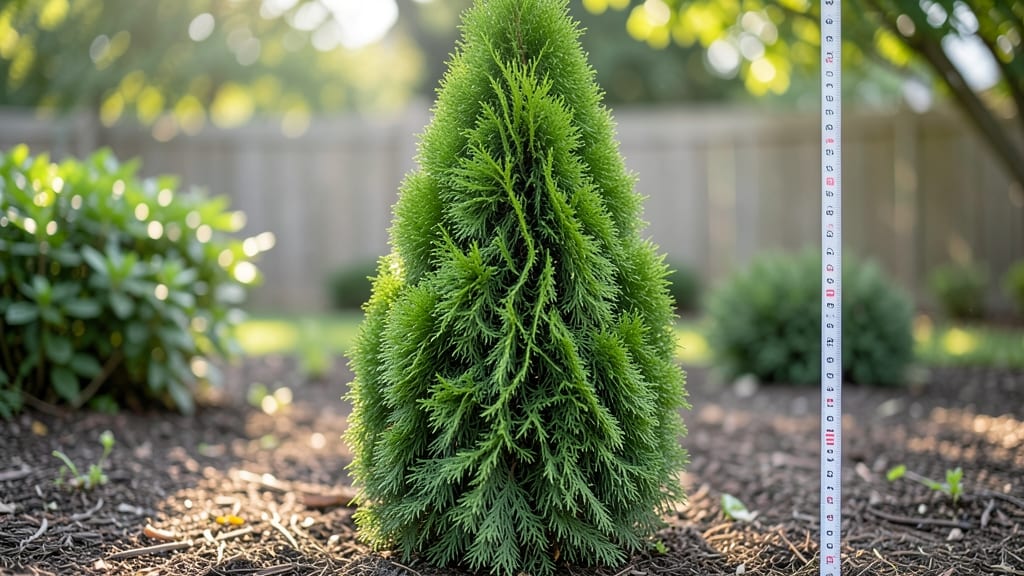
Emerald Arborvitae grow to a mature height of 12-15 feet—tall enough to create a striking privacy screen without dominating small yards.
If you're dreaming of a lush, evergreen privacy screen but lack the space for towering trees, the Emerald Arborvitae could be your perfect solution—but how tall do they really grow?
This compact conifer delivers big impact in small yards, but proper spacing and pruning are key to keeping it from outgrowing its welcome.
Unlike fast-growing trees that shoot up overnight, these 🌲 thrive steadily at 12-24 inches per year, making them predictable and easy to plan around.
That means in just 5 years, you’ll see noticeable height, and by 10 years, they’ll reach their full potential—ideal for defining property lines or framing a cozy patio.
Below, I’ll share the exact spacing you need to avoid overcrowding, how to prune for a fuller look, and why sunlight matters more than you think for keeping them at the perfect height for your space.

Emerald Arborvitae height and growth rate: what to expect over time
The Emerald Arborvitae (Thuja occidentalis 'Smaragd') is a popular choice for small yards because it grows into a neat, columnar shape while staying relatively compact.
Unlike its taller cousins, this evergreen typically reaches 12 to 15 feet tall at maturity, making it ideal for privacy screens without overwhelming your space. Understanding its growth rate and how sunlight affects its height will help you plan your landscape design effectively.
When planted, your Emerald Arborvitae will grow about 12 to 24 inches per year under ideal conditions. In the first year, you can expect it to reach 2 to 3 feet tall, while by year three, it will likely hit 8 to 10 feet.
This steady growth rate means you’ll see noticeable changes year over year, but it won’t shoot up overnight. Proper spacing and sunlight exposure play a huge role in how tall your arborvitae ultimately becomes.
Sunlight exposure directly impacts vertical growth. In full sun (6+ hours daily), Emerald Arborvitae tends to grow taller and more vigorously, often reaching the upper end of the 12-15 foot range. However, in partial shade (3-6 hours of sun), growth may slow slightly, resulting in a slightly shorter, bushier plant. This makes it a versatile choice for various garden settings, from sunny backyards to shaded corners.
Here’s a quick breakdown of what to expect based on sunlight conditions:
| Factor | Full Sun (6+ hrs/day) | Partial Shade (3-6 hrs/day) |
|---|---|---|
| Mature Height | 14-15 ft | 12-14 ft |
| Annual Growth Rate | 18-24 in | 12-18 in |
| Growth Habit | Taller, narrower | Shorter, bushier |
| Best For | Privacy screens, windbreaks | Shaded areas, foundation plantings |
If you’re planting Emerald Arborvitae as a privacy screen, aim for 3 to 5 feet of spacing between plants in a single row. This spacing allows each plant room to grow to its full height while maintaining a dense, unbroken barrier.
For double rows, increase spacing to 4 to 6 feet to prevent overcrowding, which can stunt growth and invite pests like spider mites.
In full sun conditions, your arborvitae will grow faster and taller, but it may also need more frequent watering—especially during the first 2 years when roots establish.
In partial shade, growth slows slightly, but the plant becomes more drought-tolerant once established. This adaptability makes it a great choice for gardens with varying light conditions.
One common mistake is assuming that pruning will stunt height growth. While pruning can shape your arborvitae, it won’t significantly reduce its mature height unless you’re doing severe shearing.
Instead, focus on light pruning in late winter or early spring to encourage fuller growth and maintain the columnar shape. Avoid heavy pruning in summer, as this can stress the plant and slow growth.
For best results, plant your Emerald Arborvitae in well-draining soil with a slightly acidic pH (6.0-7.0). Amend heavy clay soil with compost to improve drainage, as soggy roots can lead to root rot and stunted growth.
Mulch around the base with 2-3 inches of organic mulch to retain moisture and regulate soil temperature, which supports steady growth throughout the year.
With proper care, your Emerald Arborvitae will provide years of year-round greenery and privacy. By understanding its growth habits and adjusting for sunlight, you can create a stunning, low-maintenance landscape feature that fits perfectly in your space.
Whether you’re lining a fence or adding height to a flower bed, this versatile evergreen delivers big impact without the bulk.
Optimal planting spaces and spacing mistakes to avoid in small yards
When planting Emerald Arborvitae in small yards, proper spacing is everything. These evergreens need 3-5 feet apart for single-row hedges to allow airflow and prevent disease. Too little space leads to competition for nutrients, stunting growth and creating dense, pest-prone thickets.
Think of it like giving each plant its own personal bubble—just enough room to thrive without crowding neighbors.
For double-row hedges, increase spacing to 4-6 feet between plants. This creates a more substantial privacy screen while maintaining airflow. Without proper spacing, you risk fungal infections like needle blight or spider mites, which love tight, humid conditions.
I’ve seen too many gardens where overcrowding turns a lush hedge into a sad, scraggly mess—don’t let that happen to yours!
Here’s the golden rule: Measure twice, plant once. Use a tape measure to mark planting spots before digging. For a 6-foot-tall hedge at maturity, a 3-foot spacing ensures each plant has room to spread its roots and branches without encroaching on its neighbors.
Skipping this step is like building a house without a foundation—it might look fine at first, but problems will surface later.
Emerald Arborvitae Spacing: Pros and Cons
✅ DO THIS
- 📏 3-5 ft spacing for single rows
- 🌬️ Airflow prevention reduces fungal risk
- 🌱 Full sun access for even growth
- 📝 Mark layout before planting
❌ AVOID THIS
- 🚫 Under 3 ft spacing causes overcrowding
- 🐛 Pest hotspots from poor airflow
- 🌑 Shady spots lead to sparse growth
- 🔄 Random planting without planning
💡 Pro Tip: Use stakes and string to visualize your hedge layout before digging.
One common mistake is assuming "more plants = thicker hedge." In reality, overplanting creates a thin, leggy hedge that struggles to fill in. I’ve seen gardeners plant Emerald Arborvitae every 2 feet only to watch their hedge grow tall and sparse.
The solution? Stick to the 3-5 foot rule and let nature do the work. Patience pays off with a full, lush hedge that blocks wind and noise beautifully.
Another spacing secret: Soil type matters. In clay-heavy soil, increase spacing to 5-6 feet to prevent root competition. Sandy soil, on the other hand, allows closer spacing (3 feet) because nutrients drain faster.
Always amend your soil with compost before planting to improve drainage and root health. This small step can mean the difference between a thriving hedge and one that fights for survival.
Finally, plan for future growth. A 12-15 foot hedge needs space at the top too! Leave 6-8 feet of clearance above the planting area for branches to spread naturally.
I once saw a beautiful Emerald Arborvitae hedge ruined because a homeowner installed a roof extension too close—now the plants rub against the eaves, causing needle damage. Measure upward as well as outward!
With the right spacing, your Emerald Arborvitae will grow into a privacy powerhouse that’s easy to maintain. Follow these guidelines, and you’ll enjoy a healthy, vibrant hedge for decades—without the headaches of overcrowding or pests. Happy planting! 🌿