
How To
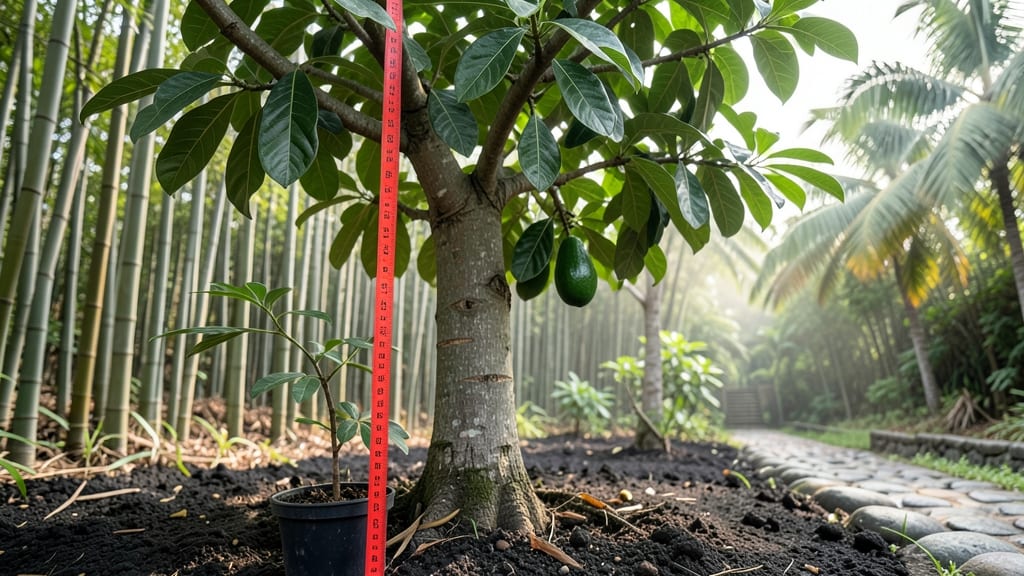
Growing an avocado tree 🥑 means knowing how tall it can reach—because some varieties stretch toward the sky while others stay compact enough for a backyard.
Picture this: a 30-foot giant in your living room or a 16-foot dwarf that fits your patio. The difference comes down to the variety you choose, where you plant it, and how you prune it over time.
If you're wondering whether your avocado tree will end up like a redwood or a small shrub, the answer depends on factors like sunlight, soil, and even the climate in your region.
In this guide, I’ll break down the exact heights by variety, growth stages, and how to control its size—so you can plan for the perfect tree, no matter your space.

Avocado tree height by variety: from dwarf to giant sizes
Choosing an avocado tree variety isn’t just about flavor—it’s also about space! Some varieties grow like towering giants, while others stay compact enough for containers or small yards.
The Hass variety, for example, can reach 30-50 feet in ideal conditions, while dwarf varieties like Mexicola max out at 12-16 feet. Your yard’s size and sunlight exposure will determine which variety thrives best.
Understanding these height differences helps you plan for pruning, container sizes, and even neighborhood HOA rules. A standard avocado tree might need 20+ feet of clearance, while a semi-dwarf variety could fit in a 10-foot-tall greenhouse.
Let’s break down the most popular varieties and their mature heights so you can pick the perfect fit for your space.
🌱
| Variety | Mature Height (ft) | Growth Rate | Best For |
|---|---|---|---|
| Hass | 30-50 ft | Moderate-Fast | Large yards, commercial orchards |
| Fuerte | 25-40 ft | Moderate | Backyards, warm climates |
| Bacon | 20-35 ft | Slow-Moderate | Urban areas, pruned shapes |
| Reed | 25-40 ft | Fast | Tropical climates, large spaces |
| Mexicola (Dwarf) | 12-16 ft | Slow | Containers, patios, small yards |
| Wurtz | 20-30 ft | Moderate | Semi-dwarf option for medium spaces |
| Lamb Hass (Semi-Dwarf) | 16-24 ft | Slow-Moderate | Balconies, small backyards |
If you’re growing avocados in containers, focus on dwarf or semi-dwarf varieties like Mexicola or Lamb Hass. These stay under 16 feet and can thrive in 15-20 gallon pots with proper drainage.
Just remember: container-grown trees need regular pruning to control height and frequent fertilizing since their root space is limited.
For in-ground planting, standard varieties like Hass or Fuerte will need plenty of space. Plant them 20-30 feet apart to allow for full growth and airflow, which reduces disease risk. If your yard is smaller, consider pruning techniques to shape the tree while maintaining its natural form.
🪴
Did you know? The Reed variety grows 30% faster than Hass in tropical climates, but it requires consistent humidity to prevent leaf drop. If you live in a dry climate, opt for Bacon or Hass, which are more drought-tolerant once established.
Always check your USDA hardiness zone—most avocado trees thrive in zones 9-11.
Pruning plays a huge role in managing height. A standard Hass tree can be kept under 25 feet with annual pruning in late winter, while dwarf varieties may only need light trimming to encourage bushier growth.
Avoid heavy pruning in summer, as this stresses the tree and slows fruit production.
🌿
Pro tip: If you’re growing avocados in cooler climates, choose dwarf varieties and plant them near a south-facing wall to absorb reflected heat. This can add 5-10 extra degrees of warmth, helping the tree thrive where standard varieties might struggle. Just be prepared for slower growth in cooler zones.
For urban gardeners, Lamb Hass is a fantastic choice—it stays under 20 feet and produces high-quality fruit in 3-5 years. Pair it with a strong support stake in its first year to prevent wind damage, and you’ll have a manageable tree that still yields bountiful harvests.
✂️
How growth stages affect avocado tree height over time
Understanding how your avocado tree grows over time helps you plan for its mature size. From a tiny sapling to a towering tree, growth rates vary based on variety, climate conditions, and care practices.
In ideal settings, avocados can grow 3 feet per year during their first decade, but this slows as they mature.
Your tree’s height isn’t just about genetics—sunlight exposure, water availability, and soil quality play huge roles.
For example, a tree in USDA Zone 10 with full sun may reach 40 feet in 10 years, while one in a cooler zone or container might stay under 20 feet.
Here’s a breakdown of typical height progression by growth stage, including key differences between in-ground and container-grown trees:
If you’re growing your avocado in a container, expect slower height growth due to root restriction. However, you can maximize growth by using a large pot (20+ gallons) and repotting every 2–3 years.
In-ground trees, on the other hand, thrive with deep, well-draining soil and consistent moisture.
Climate also impacts height—trees in warm, tropical zones grow faster than those in cooler regions. For example, a Hass avocado in Zone 10 may hit 30 feet in 7 years, while the same variety in Zone 9 might take 10+ years to reach that height.
To encourage healthier growth, fertilize with balanced NPK (10-10-10) in spring and fall, and avoid overwatering, which can stunt root development. With the right care, your avocado tree can reach its full potential—whether you’re aiming for a backyard giant or a container-friendly dwarf.
🌱