
Plants
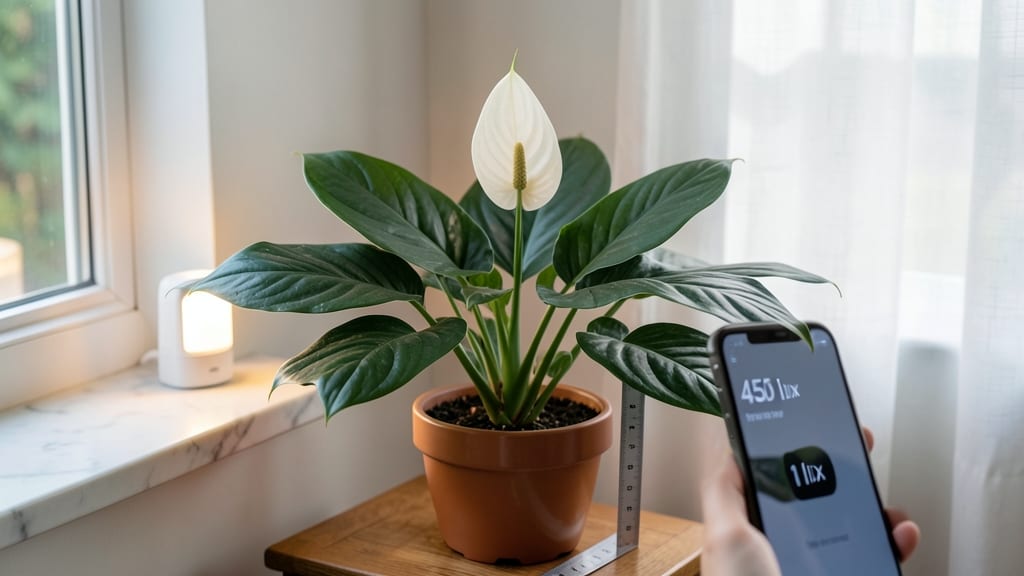
A peace lily plant needs bright, indirect light for 4-6 hours daily—that’s the magic window between thriving and struggling.
Struggling to keep your peace lily alive despite its reputation as an "easy-care" plant? Light levels could be the silent killer—too much sun scorches its leaves, while too little dims its iconic white blooms.
This adaptable 🌿 plant handles low-light offices just fine, but it craves bright, filtered light to reward you with glossy foliage and frequent blooms. The key is avoiding harsh midday rays, which turn its leaves crispy faster than a forgotten lunch.
Below, I’ll show you exactly where to place it—whether you’ve got a dim corner or a sun-drenched south window—and how to spot the subtle signs when it’s begging for more (or less) light.

Ideal light requirements for peace lilies: low to bright indirect light explained
Peace lilies (Spathiphyllum) earn their reputation as low-light champions, but they actually thrive in a specific light spectrum that balances their natural tropical habitat needs. Understanding foot-candles (light intensity) will help you pinpoint the perfect spot for your plant.
Too little light stunts growth, while too much causes leaf burn—both are silent killers for peace lilies.
The key to success lies in bright indirect light, which mimics the dappled sunlight of their native understory. This means placing your peace lily near a window but never in direct rays.
For reference, ideal light levels range from 100 to 2,000 foot-candles, with 500-1,000 foot-candles being the sweet spot for consistent blooming and lush foliage.
| Light Condition | Foot-Candles Range | Best Window Placement | Plant Response |
|---|---|---|---|
| Low Light | 100-500 fc | North-facing window, 3-5 ft away | Survives but grows slowly; fewer blooms |
| Ideal Bright Indirect | 500-1,500 fc | East/west window, 1-3 ft away | Thrives with lush leaves and frequent blooms |
| Too Much Direct Sun | 2,000+ fc | South-facing window without filter | Leaf burn, crispy edges, stunted growth |
| Artificial Supplement | 1,000-1,500 fc | Grow light 12-18 inches above | Balances indoor light gaps; encourages blooms |
In most homes, the best spots for peace lilies are east-facing windows or north-facing windows where light is gentle. Avoid south-facing windows unless you use a sheer curtain to diffuse the harsh afternoon sun.
Even then, keep your peace lily at least 3 feet away from the glass to prevent overheating.
Seasonal light changes can throw off your peace lily’s routine. During winter months, when natural light dims, supplement with a 12-hour grow light to maintain the 500-1,000 foot-candle range.
In summer, watch for longer daylight hours—move your plant slightly farther from the window to avoid leaf scorch from increased intensity.
Pro tip: Rotate your peace lily quarterly to ensure even light exposure. This prevents one-sided growth and keeps those glossy leaves pointing in all directions. A simple 180-degree turn every 3 months works wonders for balanced development.
Direct sunlight is the number one enemy of peace lilies. Even a few hours of unfiltered midday sun can cause brown patches on leaves within days.
If you notice white or yellow speckles, it’s a clear sign your plant is getting too much light—move it immediately to a shadier spot.
For offices or bathrooms with minimal natural light, a LED grow bulb (like a 6,500K daylight bulb) can bridge the gap. Position it 12-18 inches above the plant and run it for 10-12 hours daily to mimic a full sun cycle.
This is especially helpful in deep winter when days are shortest.
Think of your peace lily’s light needs like a thermostat—too hot or too cold, and it suffers. The goal is consistent, moderate light that keeps leaves vibrant and encourages those iconic white blooms.
With the right setup, your peace lily will reward you with year-round greenery and occasional floral surprises.
Remember: Peace lilies are adaptable, but they’re not invincible. Start with bright indirect light, monitor their response, and adjust gradually. Your plant will thank you with glossy leaves and healthy growth for years to come. 🌿
Signs your peace lily isn’t getting the right light (and how to fix it)
Your peace lily’s leaves are telling you everything you need to know about its light conditions. The most common red flags? Yellowing foliage, brown leaf tips, or drooping leaves—each symptom points to a specific lighting problem.
I’ve seen these signs countless times in my own collection, and trust me, the fixes are simpler than you’d think.
Start by observing where your plant sits. A north-facing window is ideal, offering bright indirect light without harsh rays. If your peace lily is near a south or west window, the midday sun is likely burning its leaves.
Conversely, if it’s tucked away in a dark corner, it’s probably starving for light.
⚠️ callout warning
Peace lilies thrive in 100-2,000 foot-candles of bright indirect light (about 2-4 feet from a north window). Direct sun (3,000+ foot-candles) causes leaf scorch, while low light (<100 foot-candles) leads to leggy growth and fewer blooms.
Test your spot: Hold a sheet of white paper near your plant. If it casts a sharp shadow, move it away. If the light is dim and diffuse, supplement with a grow light.
Here’s how to diagnose and fix each common issue. If your peace lily’s leaves are yellowing at the base, it’s likely getting too much direct light. Move it 3-4 feet back from the window or add a sheer curtain to diffuse the rays.
For brown tips, the air is probably too dry—a classic sign of low humidity combined with bright light. Mist the leaves or place a pebble tray nearby.
Drooping leaves usually mean underwatering, but they can also signal insufficient light. If the soil stays moist but the leaves sag, your peace lily is stretching toward light.
Rotate the pot quarter-turns weekly to encourage even growth, then consider relocating it to a brighter spot—like a bookshelf near a window or a plant stand.
If your peace lily refuses to bloom, it’s not getting enough light intensity. These plants need consistent indirect light to trigger flowering. Try placing it 1-2 feet closer to a window (but not in direct sun) and fertilize lightly with a balanced 10-10-10 mix in spring and summer.
Avoid over-fertilizing—this can stress the plant and delay blooms.
Pro tip: Peace lilies are forgiving, so don’t stress if you’ve overcorrected. If you’ve moved it to a too-dark spot and the leaves turn pale, give it 2-3 weeks to adjust.
If the damage is severe, trim the affected leaves with sterilized scissors to encourage new growth. With the right light, your peace lily will bounce back faster than you’d expect!