
Plants
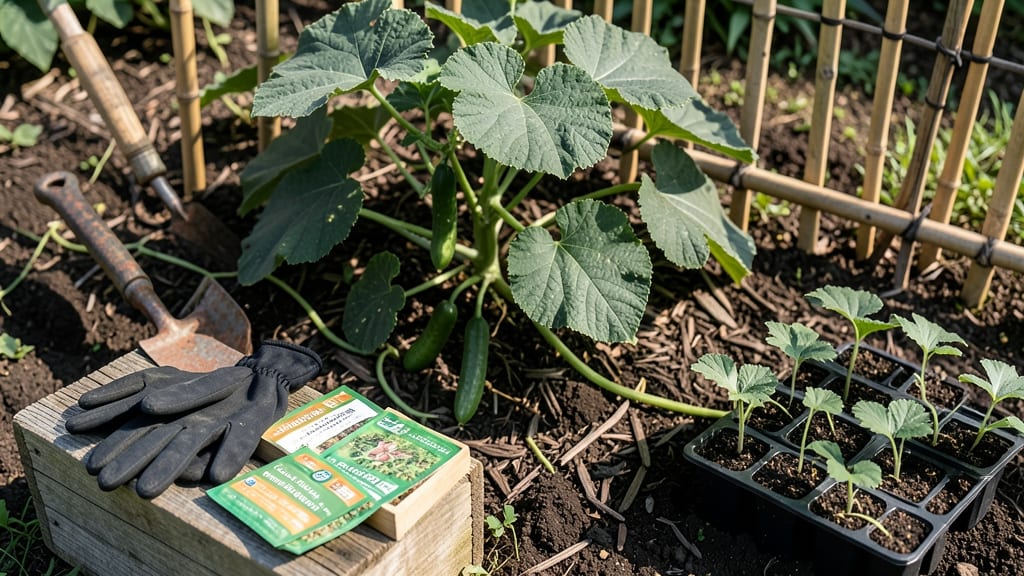
Plant cucumbers in Zone 6 after your last frost date—typically between mid-May and early June—when soil temperatures hit 60°F and stay warm.
If you’ve ever watched your 🥒 cucumber seedlings wilt overnight after a late frost, you know timing is everything. Plant too early, and the cold will kill them; too late, and you’ll miss the summer harvest window.
The key is patience and precision—waiting for the right moment makes all the difference.
Zone 6 gardeners have a short but sweet window to get cucumbers in the ground. Most varieties need 55–70 days to mature, so starting too late means smaller yields or no harvest at all.
The good news? With the right timing, you can stretch your growing season for a longer harvest.
Below, I’ll break down the exact weeks to plant, whether to start seeds indoors or direct-sow, and how to adjust for your local microclimate. Plus, I’ll share pro tips for companion planting and succession sowing to keep your garden producing all summer.
Zone 6 cucumber planting timeline: exact weeks for peak growth
Getting your cucumber seeds in the ground at the right time in Zone 6 means the difference between a bountiful harvest and wasted effort. Since cucumbers are frost-sensitive, timing is critical—especially when your last frost typically falls between April 15–May 1.
This week-by-week guide ensures you plant at the perfect moment for your region's climate.
For Zone 6 gardeners, the ideal window starts with indoor seed starting 3–4 weeks before your last frost, followed by transplanting outdoors after soil warms to 60°F.
Miss these cues, and you risk stunted growth or disease. Let's break down the exact weeks to follow for peak production.
⚠️ NON-NEGOTIABLE: Always check your local frost-free date—some Zone 6 areas may vary by 1–2 weeks. Use the National Weather Service or Almanac tools to confirm before planting.
| Week | Task | Details | Soil Temp | Notes |
|---|---|---|---|---|
| Week 1–2 (Late March) | Start seeds indoors | Sow 1 inch deep in seed trays | 65–75°F | Use grow lights if natural light is weak |
| Week 3–4 (Early April) | Hardening off seedlings | Acclimate to outdoors (5–10 mins/day) | 50–60°F | Protect from wind; avoid frost exposure |
| Week 5–6 (Mid-April) | Direct-sow outdoors (optional) | Plant 3–4 seeds per hill, 1 inch deep | 55–60°F | Use frost blankets if nights are cold |
| Week 7–8 (Late April) | Transplant seedlings | Space 12–24 inches apart (bush types) | 60°F+ | Water deeply after transplanting |
| Week 9–10 (Early May) | Direct-sow for late varieties | Plant heat-tolerant varieties (e.g., 'Straight Eight') | 65°F+ | Ideal for fall harvests |
| Week 11–12 (Mid-May) | Succession planting | Sow every 2 weeks for extended harvest | 60°F+ | Prevents overproduction at once |
If you're growing bush cucumbers (like 'Bush Champion'), you can plant them slightly earlier—around Week 6–7—since they mature faster. For vining varieties (e.g., 'Marketmore'), wait until Week 8–9 to ensure strong vines for trellising.
Pro tip: Use a soil thermometer to confirm temperatures before transplanting. Cucumbers thrive when soil stays above 60°F for at least a week. If nights dip below 50°F, cover plants with row covers or cloches to protect tender leaves.
For Zone 6 gardeners in cooler microclimates (e.g., near lakes or high elevations), delay planting by 1–2 weeks. Conversely, urban areas with heat islands
5 Critical factors that change your cucumber planting window
Your Zone 6 cucumber planting window isn’t set in stone—it shifts based on soil temperature, frost risk, and even your yard’s microclimate. Unlike heat-loving tomatoes, cucumbers need warm soil (60°F+) to germinate, and a single late frost can wipe out your entire crop.
The good news? With these 5 factors in mind, you can adjust your timeline for a foolproof harvest.
First, let’s tackle the biggest myth: "Just plant after the last frost date." Wrong! While frost is a major factor, soil temperature is equally critical. Cucumber seeds won’t sprout until the ground reaches 60°F, even if daytime temps are warm.
In Zone 6, this often means waiting until late May or early June, not mid-May. Use a soil thermometer to confirm—it’s the only way to know for sure.
Here’s how to put this into action: If your last frost is May 1 but your soil hits 60°F on May 15, wait until then to plant. If you’re growing vining cucumbers, delay another week to ensure they have enough heat to fruit.
For bush varieties, you can plant slightly earlier since they’re more cold-tolerant.
Pro tip: Use black plastic mulch to warm the soil faster. Lay it down 1–2 weeks before planting—it can raise soil temps by 5–10°F, giving you an earlier start. Just remove it before harvesting to avoid soil contamination.
Don’t forget about succession planting! In Zone 6, you can squeeze in two harvests by sowing a second batch in late June for a fall crop. Choose shorter-day varieties like 'Straight Eight' for better results.
Finally, if you’re unsure about your local frost dates, plug your ZIP code into the USDA Plant Hardiness Zone Map or a frost-free date calculator. These tools adjust for your specific location, accounting for elevation and nearby water bodies that can delay spring warming.