
Fertilization
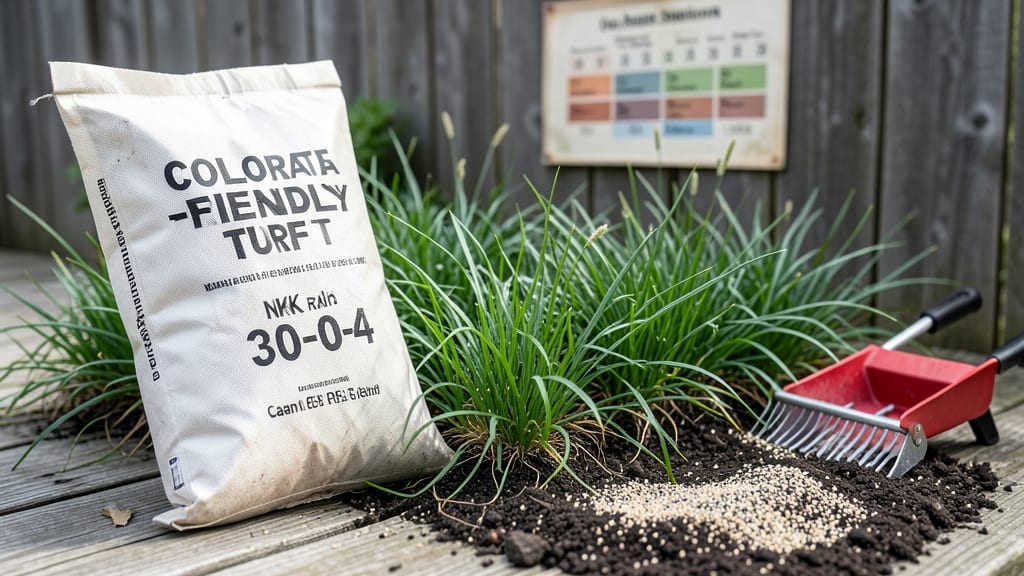
Fertilizing your lawn in Colorado at the right time is the secret to a thick, green carpet that survives our 5-7 USDA zones and unpredictable weather.
Picture this: you’ve just spent the winter dreaming of a lush yard, only to watch your 🌱 lawn grass turn patchy after that first spring fertilizer.
Or worse, you overdo it in summer and end up with burned grass. Colorado’s cool-season grasses—like Kentucky bluegrass and fescue—need precise timing to avoid these mistakes.
Spring and fall are the two critical windows for feeding your lawn, but altitude, soil type, and even microclimates shift those dates.
Whether you’re in Denver, Colorado Springs, or the mountains, I’ll break down the exact schedule—plus how to read your lawn’s signals so you never fertilize too early or too late.
By the end, you’ll know not just when to fertilize, but how to prep your soil, choose the right product, and water like a pro for results that last. Let’s get started.
Optimal Colorado lawn fertilization schedule by season (spring & fall timing explained)
Colorado’s cool-season grasses like Kentucky bluegrass, fescue, and ryegrass thrive with precise fertilization timing. Unlike warm-season lawns, these grasses grow best in spring and fall, when temperatures are moderate. Fertilizing at the wrong time can lead to burned grass, wasted fertilizer, or weak growth during dormancy.
Let’s break down the exact windows for Front Range and mountain areas, including soil temperature triggers and regional adjustments.
Timing your fertilizer applications around soil temperatures and grass growth cycles is key. In Colorado, early spring (March–April) and early fall (September–October) are the prime windows. However, mountain areas may need adjustments due to later frost dates and cooler soils.
For example, Denver’s 5,280-foot elevation has a different schedule than Fort Collins’ 5,000 feet or Aspen’s 7,800 feet. Let’s dive into the specifics.
🌱 Comparison Table: Colorado Lawn Fertilization Schedule by Season
For Front Range lawns, aim to fertilize twice in spring (March and April) and twice in fall (September and October). Use a slow-release fertilizer with a 20-5-10 NPK ratio to avoid burning grass.
In mountain areas, delay spring fertilization until soil temperatures consistently reach 45°F, often 4–6 weeks later than the Front Range. This delay prevents fertilizer from washing away during spring thaw.
Always check soil moisture before fertilizing. If your lawn is dormant or stressed, wait until it shows signs of active growth (green color, firm blades). Over-fertilizing in summer can lead to brown patches and fungal issues, so skip fertilization entirely during June–August.
Instead, focus on deep watering to keep roots healthy.
Pro tip: Use a soil thermometer to monitor temperatures. For Denver-area lawns, aim to fertilize when soil temps are 50–60°F in spring and 60–70°F in fall. In higher elevations, like Estes Park, wait until late April for spring fertilization to avoid late frosts damaging new growth.
After fertilizing, water your lawn lightly but frequently for the first 24–48 hours to help nutrients absorb into the soil. Avoid heavy watering immediately after application, as it can leach nutrients away.
For organic options, consider compost tea or fish emulsion in early spring to boost microbial activity before synthetic fertilizers.
One common mistake is fertilizing too late in fall. By mid-October, cool-season grasses start preparing for dormancy. Apply your final fall fertilizer by September 30 to allow roots to
5 Critical factors that determine your exact fertilization timeline in Colorado
Colorado’s cool-season grasses like Kentucky bluegrass and fescue need precise timing for fertilization. Unlike warmer climates, our variable altitudes and late-spring frosts create unique challenges. Ignoring these factors can lead to wasted fertilizer or stressed lawns. Let’s break down what truly matters for your local fertilization schedule.
First, soil temperature is your best indicator. Grass roots stay dormant below 50°F, so fertilizing too early won’t help. Wait until daytime temps consistently hit 55°F+—usually late March to early April on the Front Range.
In mountain areas, this can delay until May. Always check with a soil thermometer to avoid guessing.
⚠️ numbered-highlights ⚠️
- 🌡️ Soil Temp: Fertilize only when soil temps reach 55°F+ (late March-April for Front Range).
- 🏔️ Altitude: Mountain areas (8,000ft+) need 2-4 weeks later than Denver.
- 🌱 Grass Type: Fescue recovers faster post-frost than Kentucky bluegrass.
- ☀️ Sunlight: Shady lawns need lower nitrogen (16-4-8) vs. sunny (20-5-10).
- 🌧️ Weather: Wait 48 hours after rain or irrigation to apply fertilizer.
Your grass type also dictates timing. Tall fescue and fine fescue bounce back faster after late frosts, so you can fertilize sooner than Kentucky bluegrass, which needs 3-4 weeks of stable warmth to avoid burn.
If your lawn still has frost damage in April, hold off until new growth appears.
Altitude adjustments are non-negotiable. Lawns above 7,000 feet (like Colorado Springs or Summit County) grow 4-6 weeks slower than Denver. Use these benchmarks: 6,000ft = March 20th, 7,000ft = April 5th, 8,000ft+ = April 20th. Pro tip: Track your last frost date locally—it’s your final deadline for spring fertilization.
Watch for weather patterns like drought or early freezes. If your area faces summer drought, avoid fertilizing in June-July—it stresses grass. Instead, focus on fall fertilization (September) to build root strength. For early freezes (common in mountain towns), shift your last feed to mid-September instead of October.
Before applying fertilizer, do this quick readiness check: ☑️ Grass is green but not growing rapidly (slow growth = ready) ☑️ Soil feels warm to the touch (not cold) ☑️ No frost predictions for 7+ days ☑️ Lawn has no visible disease (like brown patches) If you miss the window, don’t panic—just wait for fall’s second chance in September.
Timing your Colorado lawn fertilization isn’t about following a calendar—it’s about reading your yard’s unique signals. By combining soil temperature, grass type, and local weather, you’ll create a schedule that works year after year.
Start with these factors, and your lawn will thank you with deep green color and disease resistance all season long. 🌿