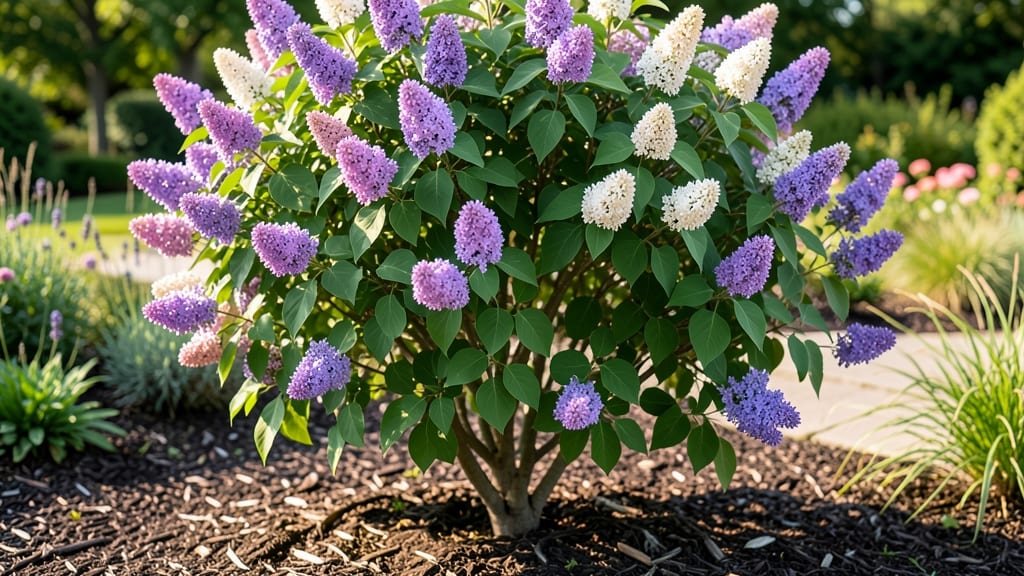
How tall does lilac grow? The answer depends on the variety and care—these fragrant shrubs can range from 3 feet to over 15 feet, so choosing the right one for your space is key to avoiding a towering shrub that outgrows your garden in just a few years.
If you’ve ever dreamed of a fragrant, purple-blanketed garden but wondered whether lilacs 🌸 will tower over your patio or stay neatly contained, you’re not alone.
Some varieties, like the common lilac (Syringa vulgaris), can reach 12 feet tall, while dwarf types like 'Little Leo' max out at just 3 feet—meaning the difference between a statement shrub and a compact border plant comes down to a single seedling choice.
Beyond variety, factors like pruning, soil quality, and climate play a huge role in how tall your lilac grows. A well-pruned lilac in full sun might stay smaller, while one left unchecked in rich soil could shoot up faster than expected.
That’s why knowing the growth habits of your chosen type—and how to manage them—is the secret to a lilac that fits your landscape perfectly.
In this guide, you’ll discover the exact height ranges for popular lilac types, how to control their growth with simple pruning tricks, and which compact varieties thrive in small spaces—so you can plant with confidence and enjoy those intoxicating spring blooms without the regret.
Lilac Height Range
6 ftto15 ft
0 ft
3 ft
6 ft
9 ft
12 ft
🌱
Medium Shrub
Lilac height by variety: small, medium, and giant-sized shrubs explained
Choosing the right lilac variety for your garden isn’t just about color—it’s about height control. Some lilacs stay as compact as a small shrub (3 feet), while others grow into towering tree-like giants (20+ feet).
The difference comes down to genetics, pruning habits, and even soil conditions. Let’s break down the height spectrum so you can pick the perfect fit for your space.
Most gardeners assume lilacs are all medium-sized shrubs, but the truth is far more varied. Dwarf lilacs like 'Miss Kim' fit in containers, while tree lilacs like 'Arctic Queen' can reach 20 feet—taller than a two-story house!
Understanding these differences helps you avoid overgrown hedges or underutilized space. Below, I’ve organized the most popular varieties by their mature heights, so you can visualize their growth before planting.
| Variety |
Mature Height (ft) |
Growth Habit |
Best For |
| 'Miss Kim' |
3-5 |
Dwarf, rounded |
Containers, small gardens |
| 'Little Leo' |
3-4 |
Dwarf, bushy |
Borders, urban yards |
| 'Bloomerang' |
4-6 |
Semi-dwarf, upright |
Foundation plantings |
| 'Sugar Swirl' |
5-7 |
Compact, multi-stemmed |
Small landscapes, patios |
| 'Common Lilac' (Syringa vulgaris) |
8-15 |
Standard, upright |
Hedges, specimen plants |
| 'Arctic Queen' |
10-15 |
Tree-form, upright |
Large gardens, statement plants |
| 'Katherine Havemeyer' |
12-18 |
Standard, vigorous |
Privacy screens, borders |
| 'President Lincoln' |
15-20 |
Tree lilac, spreading |
Park-like settings |
| 'Ural’skaya Zorya' |
12-15 |
Cold-hardy, upright |
Northern climates |
| 'Dwarf Korean Lilac' |
3-4 |
Dwarf, multi-stemmed |
Rock gardens, containers |
| 'Black Beauty' |
10-12 |
Standard, dark foliage |
Specimen plant, contrast |
| 'Lavender Lady' |
6-8 |
How to control lilac height: pruning tips for compact growth
Lilacs can grow into towering shrubs if left unchecked, but with the right pruning techniques, you can keep them at your desired height and shape. The key is understanding when to prune and how aggressively—because cutting at the wrong time can actually reduce next year’s blooms.
Whether you want a 3-foot dwarf lilac or a 6-foot hedge, mastering these steps will transform your overgrown shrub into a well-behaved garden star.
Most gardeners make one of two mistakes: pruning too late in the season or cutting back too harshly. Lilacs bloom on old wood, meaning their flowers form on branches from the previous year. If you prune after mid-summer, you risk removing next year’s buds entirely.
But don’t worry—with the right timing and tools, you can revive even the most overgrown lilacs while keeping their fragrance and beauty intact.
When to prune lilacs for height control:
- Best time: Immediately after flowering (late spring to early summer)
- Avoid pruning: Fall or winter (this removes next year’s blooms)
- Exception: Light shaping pruning can be done in late summer if needed
Step-by-Step Lilac Pruning Guide
- Step 1: Gather your tools
- Bypass pruners (for clean cuts)
- Loppers (for thicker branches)
- Garden gloves (to protect hands)
- Disinfectant (rubbing alcohol or bleach)
- Step 2: Remove dead or crossing branches
- Cut out dead wood first (identify by brown, dry appearance)
- Remove branches growing inward to improve airflow
- Eliminate suckers at the base (they drain energy)
- Step 3: Shape the shrub
- For compact growth, cut back 1/3 of oldest stems to ground level
- For maintenance pruning, trim only new growth that exceeds your height goal
- Use hand pruners for precise cuts just above a bud or leaf node
- Step 4: Clean up and fertilize
- Remove all clippings (don’t leave them at base)
- Apply balanced fertilizer (10-10-10) in early spring
- Mulch around base to retain moisture
- Step 5: Monitor growth
- Check for new suckers monthly and remove immediately
- Water deeply after pruning to reduce shock
- Repeat pruning next year at same time
Pro Tip: For tree-form lilacs, prune branches to create a clear trunk and open canopy
If your lilac has become a wild, unruly monster, don’t panic—you can still bring it under control. Start by removing 30-50% of the oldest stems at the base during the first year.
This forces the plant to redirect energy to younger, more manageable branches. Over 2-3 years, you’ll see dramatic height reduction while maintaining that classic lilac fragrance.
For container-grown lilacs, prune more aggressively every year to prevent root-bound stress. Dwarf varieties like 'Little Lila' or 'Munstead' can be kept in 5-gallon pots with regular pruning, while standard types need 15+ gallon containers. Always use well-draining soil and water consistently to support compact growth.
Remember: Patience is key. Lilacs respond best to gradual pruning over multiple seasons. With consistent care, you’ll enjoy fragrant blooms without the overgrown mess—just in time for spring’s sweetest garden moments. ✂️🌸
★★★★★5.0(7 reviews)
|