Plants
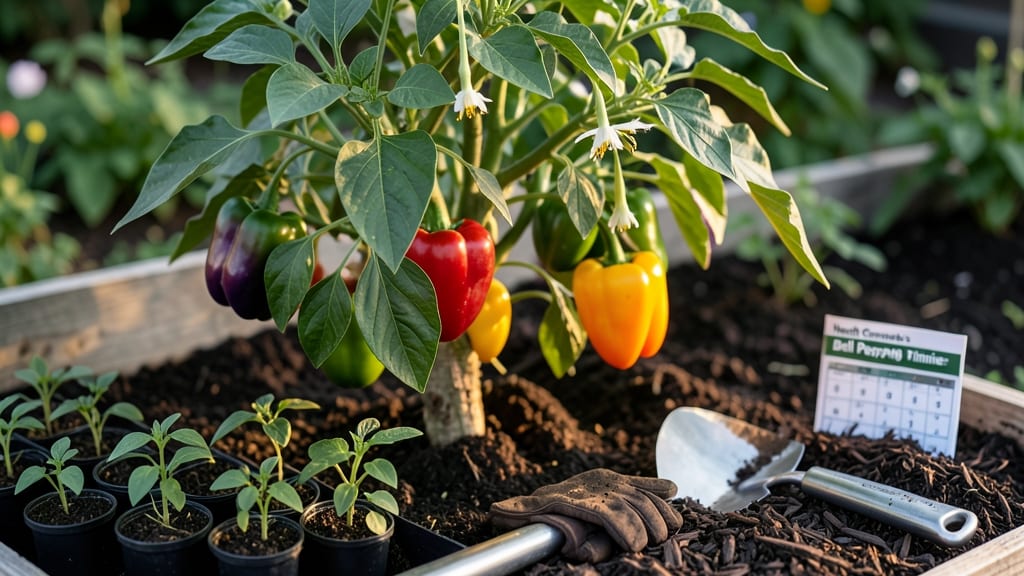
Planting bell peppers in North Carolina after your last frost date—typically mid-April to mid-May—is the key to a thriving harvest.
North Carolina’s hot summers and unpredictable spring weather can make timing your bell pepper planting a make-or-break factor—get it wrong, and you’ll sacrifice flavor, yield, or even lose your plants entirely.
Most gardeners in zones 7a-8b wait until soil temperatures hit 60°F and all frost risk has passed, but coastal areas like Wilmington may start earlier.
Below, I’ll break down the exact month-by-month schedule, plus pro tips for soil prep, spacing, and extending your growing season for a longer harvest.
Best planting months for bell peppers in NC by hardiness Zone
North Carolina’s USDA Zones 8a-8b offer a perfect climate for growing bell peppers, but timing is everything. Since peppers are heat-loving plants, planting too early risks frost damage, while late planting may result in stunted growth before the first frost.
The key is balancing soil warmth (at least 60°F) with frost-free conditions—a tricky dance in NC’s unpredictable spring.
Most gardeners in NC’s Piedmont and Coastal regions aim for mid-April to mid-May as their ideal transplanting window. However, mountainous areas (Zone 7a) may need to wait until late May, while coastal zones (8b) can start as early as late March.
The last frost date (typically March 15 in most of NC) is your starting point, but don’t rush—peppers need consistent warmth to thrive.
If you’re starting seeds indoors, begin 8-10 weeks before your target transplant date. For Zone 8a-8b, this means sowing seeds in February for early April transplants. Use grow lights to supplement weak winter sunlight, and keep seedlings in 70°F+ environments to prevent legginess.
Hardening off seedlings for 7-10 days before transplanting is critical—NC’s spring can swing from 50°F mornings to 80°F afternoons.
For gardeners in coastal NC (Zone 8b), early planting offers a longer harvest window but comes with risks. Fungal diseases like early blight thrive in the humidity, so space plants 18-24 inches apart for airflow and mulch with straw or pine needles to keep foliage dry.
In contrast, mountain zones (7a) should prioritize fast-maturing varieties like 'Early Cal Wonder' (60 days) to avoid first frost in November.
One common mistake is planting too early and relying on row covers to protect peppers from frost. While this works for young seedlings, mature plants still need consistent warmth to set fruit.
If you’re experimenting with early starts, use covers only until soil temps stabilize above 60°F, then remove them to prevent heat stress when temperatures spike.
Late planting (June or July) can still yield a harvest if you choose heat-tolerant varieties like 'Aristotle' or 'Jupiter.' These peppers thrive in 90°F+ heat and produce well into October. However, expect smaller fruits and fewer peppers compared to spring plantings.
For a balanced approach, many NC gardeners plant half their peppers in spring and half in late summer for a staggered harvest.
Monitor your local NC State Climate Office for real-time updates on frost forecasts and heat advisories. Tools like Almanac’s Frost Calculator can help adjust your planting timeline based on your exact location.
Remember, bell peppers are sensitive to temperature fluctuations, so aim for a minimum of 180 frost-free days to ensure a full harvest cycle.
Once planted, focus on consistent moisture and balanced fertilization. Peppers need 1-2 inches of water weekly, delivered at the base of the plant to avoid wetting leaves (which promotes disease). A mulch layer
How to extend your bell pepper growing season in NC’s climate
North Carolina’s humid summers and unpredictable spring frosts can shorten your bell pepper harvest if you don’t plan ahead. But with smart strategies, you can enjoy peppers from early summer to fall. The key is combining season-extending tools with heat-tolerant varieties and succession planting to beat NC’s climate challenges.
I’ve tested these methods in my own garden, and they’ve helped me double my harvest while avoiding common pitfalls like blossom-end rot and sunscald. Whether you’re in the Piedmont or Coastal Plain, these tactics will give your peppers the edge they need to thrive.
- 1 Use row covers in early spring (March-April) to protect seedlings from late frosts while allowing 60°F+ soil warmth. Remove covers when peppers flower to prevent heat stress.
- 2 Set up cold frames for fall planting (August-September). These create 5-10°F warmer microclimates, letting you harvest peppers 2-3 weeks later than outdoor plants.
- 3 Plant heat-resistant varieties like 'Carolina Wonder' or 'Jupiter', which tolerate 90°F+ temps without wilting. These also resist blossom-end rot in NC’s high humidity.
- 4 Practice succession planting every 2-3 weeks from April to July. This ensures a continuous harvest and reduces overcrowding, which spreads disease in NC’s damp climate.
- 5 Avoid sunscald by mulching heavily (3-4 inches of straw) and watering deeply in mornings. Shade cloth (30%) can protect peppers during peak summer heat (June-August).
One mistake I made early on was planting all peppers at once—this led to a glut of ripe peppers followed by a sudden drop-off. Now, I stagger plantings by 3-week intervals to keep the harvest steady.
For example, my first batch goes in mid-April, followed by May 1st and May 15th plantings.
NC’s high humidity also demands vigilance against fungal diseases. I’ve found that raising beds 6-12 inches improves drainage and reduces blossom-end rot. Add calcium-rich compost at planting time to prevent this common issue.
For extra protection, I sprinkle crushed eggshells around the base of plants—they’re a natural calcium source.
Don’t forget to prune suckers regularly (every 2 weeks) to focus the plant’s energy on fruit production rather than foliage. This is especially critical in NC’s long growing season, where peppers can get leggy if left unchecked. A quick trim with clean shears keeps plants compact and productive.
With these strategies, you’ll enjoy sweet, homegrown bell peppers from June through October—or even later with cold frames. The secret is adapting to NC’s climate rather than fighting it. Happy gardening! 🌶️